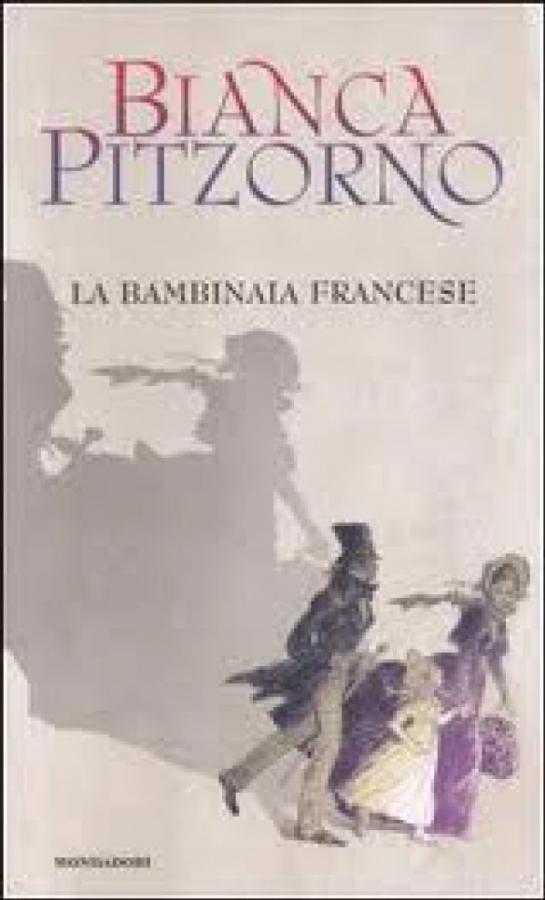
The French Nanny
Nineteenth-century fiction holds an enduring fascination, often inviting modern reinterpretations. Such is the case with *The French Nursemaid*, which rewrites a great classic novel: Charlotte Brontë's *Jane Eyre*. Here, the protagonist is a young French girl. The novel falls essentially into two parts. The first is set in Paris. Sophie is an impoverished child who lost her father during the glorious days of 1830, which brought Louis Philippe, the bourgeois king, to power. Through workers’ mutual aid societies, Sophie learned to read and write, advancing from a “Bear” to a “Monkey”—terms that, in the vernacular of printshop laborers, distinguish the illiterate, fit only for manual tasks, from those educated enough to be entrusted with typesetting. Reading great novels, newspapers, and periodicals secures Sophie a social role within her modest community and, above all, fires her imagination while elevating her ideals and aspirations. This is the finest portion of the book, as the author diverges from much nineteenth-century fiction by embracing a realist, Zolaesque approach rather than a pious, sentimental one. Sophie loses her mother as well, but fortuitously finds shelter with a celebrated actress, Céline, who is married—or rather, believes herself married—to the villainous Edward Rochester. Sophie becomes both nursemaid and companion to Adèle, the couple’s daughter. In Céline’s household, Sophie meets a Black youth, Tùssi, and Céline’s godfather, an elderly French Enlightenment thinker. The author uses this eccentric aristocrat to articulate her ideal school: one where learning is inquiry, open equally to rich and poor without class distinction. Because Tùssi is still legally an enslaved person, this also provides an occasion to address slavery and colonial conditions, though it must be noted that this theme, which tormented the entire nineteenth century, is handled superficially, striking a forced and discordant note throughout the novel. Céline’s fortunes, and by extension Sophie’s, unravel abruptly upon the godfather’s death: grasping relatives have Céline imprisoned and turn Sophie and Adèle out into the street. Tùssi is forced into domestic servitude with one of the relatives. One might expect the wealthy Rochester to intervene; instead, this callous and self-absorbed man reveals that his marriage to Céline was an orchestrated sham and carries Adèle off, even as he disowns her as his daughter. In the second part, the setting shifts to England and the somber manor of Thornfield. Sophie manages to follow Adèle, securing employment as her French nursemaid by pretending not to understand English. This device allows her to recount, from her own vantage point, the narrative of Charlotte Brontë’s masterwork. Needless to say, the story draws to a happy ending for our protagonists, who eventually reunite in France, their fortunes restored once Céline claims the legitimate inheritance left by her godfather. A distinctive feature of the novel is its narrative structure. In the first part, the letters Sophie and Tùssi write to Céline, already behind bars, are juxtaposed with a third-person account of Sophie’s circumstances up to her departure for England. It is a device that enlivens the prose, effectively balancing three viewpoints: the authorial voice and the inner reflections of the two main characters. In the second part, the epistolary mode takes precedence. The correspondence between Sophie and Tùssi chronicles the happenings at Thornfield. It must be said, however, that this narrative device becomes repetitive and dull, not least because the letters possess so little intimacy or genuine emotion. Confronted with detached, formal accounts of the plot, the reader is left disappointed, expecting the two protagonists to probe their feelings and finally declare the love of which we are certain from the outset. In the final pages, Sophie assumes the role of first-person narrator, yet the text never rises above a perfunctory chronicle of events. The novel is plainly an amalgamation of nineteenth-century narrative conventions. The reimagining of Charlotte Brontë’s work is trite, mirroring an overly romanticized and conventional reading of *Jane Eyre*. What weighs the story down most heavily is a sluggish narrative pace, a dearth of action, and an absence of psychological depth in the characters. An encouraging start soon gives way to mounting tedium. Why not read it? It is long and boring.
The Book of Illusions
The protagonist loses his wife and children in a plane crash. To escape despair, he writes the biography of a silent-film actor who had vanished without a trace. Tracked down by Alma, with whom he falls in love, he learns that the former actor lives on a farm, where he has continued to make films that he has resolved to destroy upon his death. The protagonist reaches the country house to witness the former actor's death, manages to watch one of the films that had been produced, and then stands by as a spectator to the fire that destroys the entirety of the cinematic works. The narrative concludes tragically with Alma’s death. It is a complex novel, in many respects intellectualized and erudite, unfolding through paradoxical events around two philosophical and existential themes: the world is entirely an illusion, where the boundary between what is real and what is fiction or the product of our imagination remains blurred; and destruction—death—is the arbitrary outcome of the illusion in which we live. The theme of illusion is personified by the former actor Hector: his origins are unknown, and he does everything to keep them obscure; he leads a double life in love that ends tragically; he is perpetually on the run, pretending to be someone else and fabricating situations until finally secluding himself in the countryside to produce cryptic films destined never to be shown in theaters. The theme of destruction, of tragedies overwhelming human lives, of inexplicable events, is embodied in the very plot of the book and in the protagonist's torments. > It is a book of fragments, a gathering of nostalgias and dreams only partially remembered . The book is very well written, in a pleasant and fluid style. Yet there is an intellectualist undercurrent that frequently renders the narrative pace cumbersome and redundant.
Five-player Briscola
Massimo runs a bar in a fictional coastal town near Livorno. Like so many provincial establishments, the bar is frequented by a group of old men who pass the time playing *briscola* and talking (or gossiping) about the affairs of the world and those of the small village. Then an extraordinary event comes along to shake up the daily grind: the corpse of a young woman is found in a dumpster. Needless to say, Massimo turns amateur detective, making his share of mistakes, but ultimately playing a decisive role in uncovering the killer. To avoid being accused of spoiling the culprit and the resolution, I will say nothing of the plot, confining myself to noting how trite and predictable it is. At first, Massimo’s attention to certain seemingly insignificant clues entices the reader, but the author’s eagerness to deliver a twist ending ruins the gradual buildup of evidence, motives, and the very logical architecture of the noir. The setting could open up intriguing possibilities if, for instance, the old men played a meaningful role in the detective plot or, conversely, if the writer were capable of portraying the atmosphere of the bar. Nothing of the sort! Setting aside the use of the Livornese dialect, the bar and its patrons remain in the background—flat, insipid, and superficial. The novel’s sole merit is the writing: simple, accessible, and clear. The reader breezes pleasantly through the pages without being subjected to any particular effort of concentration, yet without lapsing into boredom. Why not read it? It is the classic travel novel, but it leaves nothing behind.
The Buddha in the attic (we all came from the sea)
The novel recounts the experiences of Japanese women sent to the United States to marry compatriots who had immigrated long before. > Some of us were from a small mountain village in Yamanashi and had only recently seen our first train. Others among us were from Tokyo, and had seen everything, and spoke a beautiful Japanese. (...) Many more of us were from Kagoshima and spoke in a thick southern dialect that those from Tokyo pretended not to be able to understand. (...) On the boat we were mostly virgins. (...) We had long black hair and broad flat feet and we were not very tall. What did they think when they saw their husbands, so different from the photographs in age and appearance? “The past was behind us, and there was no way of going back.” The novel follows these women into a reality where they must say > Yes, sir, or No sir, and do as they were told, Better still, say nothing. You belong to the invisible world . They learn to obey, to work hard, to speak English, or at least enough words to survive, and they even take lovers or find husbands among the Americans: they are hardworking and docile, just as men like them to be. When World War II breaks out, from good immigrants the Japanese turn into traitors, spies, and enemies, to be interned in concentration camps. And so Japanese women, even those married to Americans, find themselves locked away. “The Japanese had disappeared from our towns. And soon,” you can still see the official notices posted on telephone poles, (...) but they are already beginning to fray and fade. (...) What those instructions were exactly, no one can clearly remember. (...) In autumn there is no Buddhist harvest festival..(...) All we know is that the Japanese are out there somewhere, in one place or another, and we will probably never meet them again in this world.” To make overall sense of the novel, one can start from the title *The Buddha in the Attic*, banally translated into Italian as *Venivamo tutte dal mare* > . Japanese identity, a blend of Buddhism and Shinto, is put away in the attic the moment the women arrive in America: the new culture must be assimilated, they must become American. It is a mere suspension, because when they are consigned to an unknown place, a non-place > , these women disappear; they are no more; it is as though they had never been. There are two chapters worth reading: *Come, Japanese!* > the journey of these women: nostalgia and the severance of ties, fear and anticipation. These are the components of exile, whatever the origin and destination, feelings common to so many migrants. *The Disappearance* > recounts the evaporation of the Japanese, and the mind wanders to an evanescent novel by Coetzee (see on this site *The Childhood of Jesus* > ). The author intended to give the narrative a choral quality. To achieve this end, she resorted to a literary device: the use of the "we" when recounting the lives of the women, and the impersonal form when narrating the disappearance of the Japanese people. Unwilling to follow the stories of individual women, making them protagonists in their own right, she turned them into a mass, weighing down the narrative and rendering the novel verbose and repetitive. Why not read it? It is boring.