Finished reading on: June 13, 2020
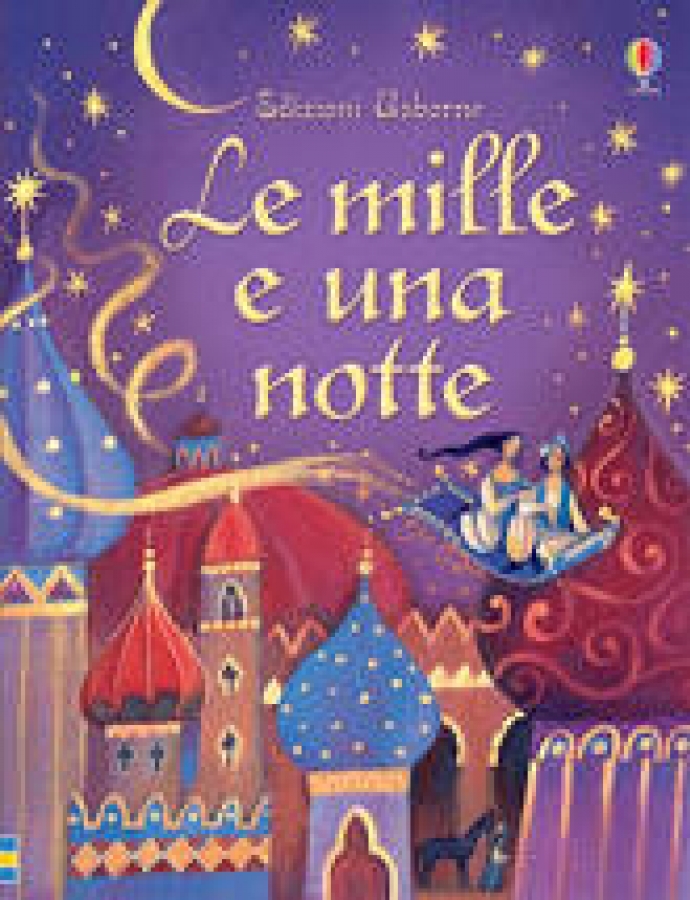
The Thousand and One Nights, Volume I
Title of the original version reviewed: «Le mille e una notte volume I»
AI Translation Notice: This review was translated from the original Italian using artificial intelligence. Book quotes and excerpts are translated interpretations and will not match the author's original English phrasing or official published translations.
The Thousand and One Nights is an Arabic manuscript likely dating back to the Abbasid Caliphate, between 750 and 900 AD: the setting is the fabulous empire of Baghdad, stretching from North Africa across the Arabian Peninsula to Central Asia and India. Its discovery is credited to Antoine Galland in the early eighteenth century, and from that moment the text spread throughout the West, sparking wonder and scandal: Orientalism was born. Owing to the many versions of the work, it should be clarified that this review refers to the text established from the original manuscripts by René R. Khawan. Let us begin with The Weaver of Nights. The king has been betrayed by his wife: a Moor “lifted her legs in the air, slipped between her thighs, and penetrated her.” From that moment on, the sovereign resolves to take a maiden as his bride each night and execute her at dawn. The vizier's daughter, Shahrazad, who “had read books and writings of every kind,” asks her father to arrange her marriage to the king, saying:
either I shall rise in the esteem of my fellows by freeing them from the peril that threatens them, or I shall die or perish with no hope of deliverance, sharing the fate of those who have died and perished before me
. Her father attempts to dissuade her with tales urging a prudent, unassuming life, but the daughter, obstinate and self-assured, replies that she could offer him other stories leading to entirely different conclusions. And herein lies the crux of The Thousand and One Nights: the word. Through literary invention, fabulation, and poetry, one can confront the direst straits, vanquish evil spirits, and even bend the will of God to one’s favor. According to the widely accepted interpretation—though not strictly corroborated by the work’s architecture—each night Shahrazad tells a story to the king: enthralled, the sovereign spares the maiden's life out of the desire to hear another tale, ultimately making her his lifelong bride. A miracle of the word! The work follows a recursive pattern: a frame narrative within which other stories unfold, all designed to persuade and astonish the listener. The prose narrative is interspersed with verses in a style characteristic of Abbasid civilization. One does well to surrender to its spell; nevertheless, certain common threads can be traced. In the celebrated The Fisherman and the Jinni, the central motif is cunning. A fisherman frees a demon imprisoned for centuries inside a jar at the bottom of the sea. Once liberated, the Jinni seeks to kill the poor man. The fisherman preys upon the demon's vanity, challenging him to demonstrate how he could possibly fit into such a small vessel; it is a ruse to seal the Jinni away once more. To the creature's pleas and promises, the fisherman replies with tales displaying the wisdom of poetry:
they might have remained just and pure,/but they abused their power/ and the world in turn oppressed them/(...) behold them restored to their squalor...
One would gladly sink into the allure of the tales of the Fisherman and the Jinni (echoing the line “if you return, we shall return”), yet we must hasten to illuminate another magnificent tale: The Porter and the Ladies. Here the theme is clemency, itself the fruit of love. A porter finds himself in the house of three ladies of consummate beauty, which prompts the poet to say:
inviolate...when I beseech her to grant me/the embrace. Beauty advises her/to show herself generous,/ but Coquetry forbids her to yield
. Three one-eyed mendicants arrive, and presently even the sultan and his vizier. A banquet ensues in which the guests are bound by an oath:
whatever you see us do, whatever you observe around us...do not seek to understand the reason
. Yet the strangeness of what they witness is too great for the guests to refrain from questioning. Ten Moors appear, poised to behead the reckless intruders who failed to honor their pledge. To appease the wrath of the three ladies, the mendicants recount their life stories and plead for mercy: it will be granted to all the guests, so profound is the wonder inspired by the tales and the pleasure derived from them by the three magnificent maidens! How can one punish when love is being sung?
The woman took the weapon and advanced until she stood before me. (...) I looked at her for a long time. (...) Her cheeks then expressed the feelings that occupied her soul, and the verses of the poet came to my mind: if my mouth is silent, my glances speak/and they will tell you what I cannot say,/for love makes manifest/the feelings hidden within me.(...)/the one is a writer of genius, though his rhetoric is beholden only to the play of eyelids;/the other is no less fine a man of letters/though he expresses himself solely through the eye
. We grasp from these lines how the bewitching word is also the fruit of oral and gestural performance, all within delightful company amidst pleasing music, sweet perfume, and the bliss of embrace, consummate
only if supplied with these four elements/youthful age, wine,/a beloved body, gold coins...
One may investigate the myriad underlying themes of the work, from the philosophical to the depiction of a society centered on beauty, art, wealth, the supernatural, and magic, set against a prevailing backdrop of sovereign violence and tyranny. Let us not ask too many questions; let us lose ourselves in the tales, in their astonishing plots, in their incredible deeds and figures, the harvest of an exuberant and irrepressible imagination; let us indulge in the pleasure of the many verses, as seductive and mysterious as the following:
the oath that binds me, I have sworn/by the intoxication stirred within me by the flutter/of her eyelid, by the curve of her hips,/by the bewitched arrows she looses at me/(...) the sorrows have fled as at the radiant rising/of the sun, leaving the moon perplexed./Was the star of day ahead of time?/Did it perhaps already wish to put her to flight?...
Why read it? Astonishing, magnificent, spellbinding, an explosion of the imagination.