Odyssey
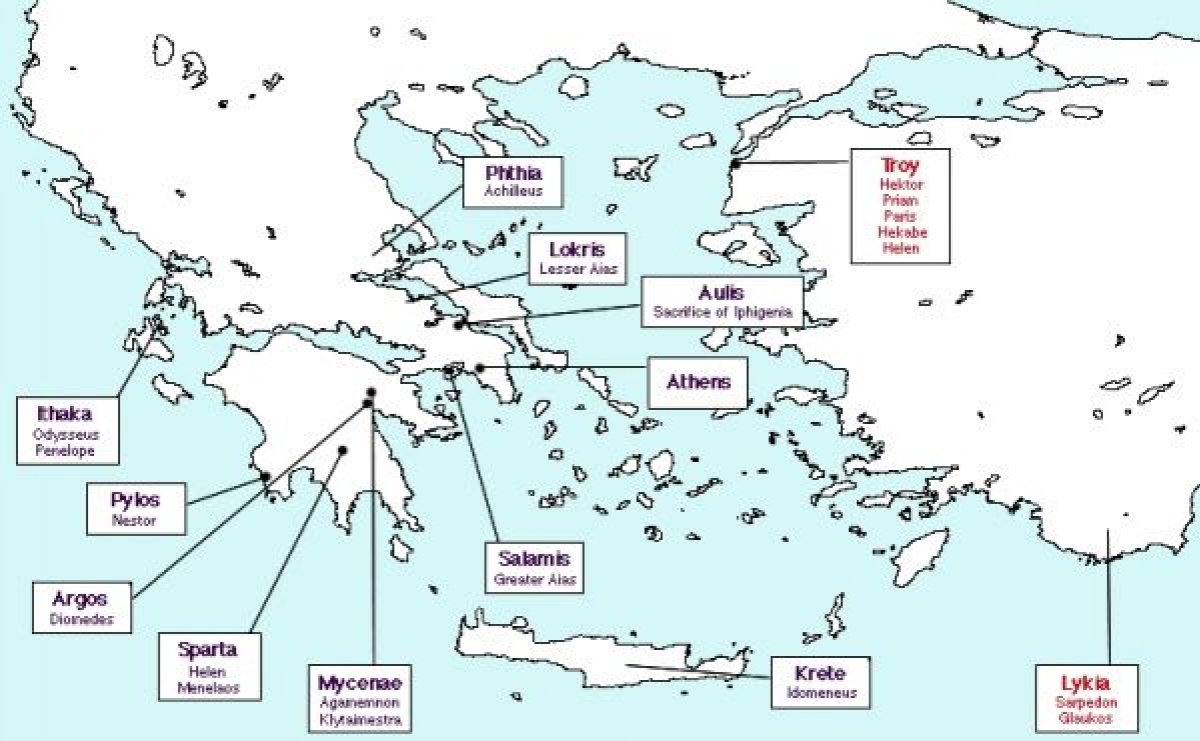
The book centers on Odysseus’s return to his home and is structured into four parts: the preamble, in which a council of the gods, on Athena’s proposal, resolves to allow Odysseus to resume his journey home by ordering Calypso to release the hero; the decision of Telemachus, Odysseus’s son, to rid himself of the suitors, who continue to frequent the palace and squander his father’s estate. After a futile appeal to the people to aid him in the struggle against the suitors, Telemachus journeys to other rulers to learn of his father’s fate and to discover whether it is possible to overcome the state of uncertainty in which he finds himself and give his mother in marriage, taking full possession of his inheritance; Odysseus’s journey to the Phaeacians, with the storm scene and the encounter with Nausicaa (the most beautiful pages of the poem) and the recounting of his adventures; the arrival home, the gradual unveiling of his identity, and the slaughter of the suitors. By many authors, the *Odyssey* is interpreted as the return of Ulysses (and thus of the traveler) and as an exaltation of his intelligence and cunning. In truth, it is a highly complex poem in which different narrative themes unfold and contrasting personalities are set against one another. A first theme is undoubtedly that of travel, and above all, of the sea. It is no coincidence that the most mesmerizing pages of the poem are those of Book V, which recounts the storm and the shipwreck of Odysseus: > A towering wave surged down upon him, with terrible fury, and sent the raft spinning round. Far from the raft he was hurled, and the rudder slipped from his hands: clean down the middle snapped the mast beneath the horrific blast of clashing winds, and far off into the sea fell sail and yardarm. Long did he remain submerged, unable to rise swiftly to the surface beneath the onslaught of the mighty wave... at last he surfaced, spewing from his mouth the bitter brine that streamed in rivulets from his head . > To the castaway, and more generally to the guest, shelter and hospitality must ever be offered : so speaks Nausicaa to her handmaidens in Book VI: > Halt, handmaidens: whither do you flee at the sight of a man? Do you take him perchance for an enemy?... Yet this is a wretched castaway who has come upon us, and we must tend to him: from Zeus come all strangers and beggars; and a gift, however small, is dear . The theme of hospitality is one of the dominant threads of the *Odyssey*, corresponding precisely to the collective feeling of a people of seafarers who are acutely aware of how quickly fortune, and wealth, can change. A second theme is constituted by the complex personality of Odysseus, well epitomized by Athena’s words in Book XIII: > Shrewd and cunning indeed would be he who could surpass you in all manner of deceit, even were it a god who encountered you. Audacious, fertile contriver, never sated with wiles, will you not even now, in your own homeland, cast aside your guile and those lying tales that have been dear to you since infancy? Come, let us speak no more of this, for we both well know the art of cunning . Ulysses is a consummate weaver of tales, and it is telling that his famous adventures are not related by the poet, but are recounted by Odysseus himself to the Phaeacians. Are they true occurrences or fairy-tale fabrications, like those he spins with such ease to the swineherd Eumaeus, to his wife, and to his own father? But who is Odysseus—a perpetual wanderer, a man by now accustomed only to fighting and traveling? It is extraordinary that at the very moment he reveals himself to Penelope, instead of embracing her and expressing his love, he must at once inform her of the prophet Tiresias’s prediction, according to which he is destined to leave Ithaca once more to undertake a new voyage and ultimately perish in the sea. There seem to be in Odysseus no feelings toward his son, his wife, and his father, who nevertheless suffered so deeply: the sole moment of genuine tenderness appears to be directed toward his mother, in the splendid verses of Book XI: > And thrice I sprang forward, my heart urging me to embrace her; thrice from my hands, like a shadow or a dream, she slipped away: a sharper agony pierced me to the core, and addressing her I spoke winged words: Mother mine, why do you flee when I yearn to hold you? . A third theme is represented by Telemachus and the intricate process through which, having grown up without a father, he is forced, in spite of himself, to become an adult. How different he is from his father!. He is full of uncertainty, of doubt, torn between love for his mother and the desire to reclaim his estate and his independence. The youth’s doubts render him a modern character, precisely because he is rich in intimate contradictions—the fruit of the conflict between his role (that of prince), his affection toward his mother, and the fact that he does not measure up to his father’s strength: he cannot string the bow! > By Zeus, not I... do hinder my mother’s marriage; indeed, I bid her marry whomsoever she pleases, and I offer her countless gifts. Yet I dare not drive her from the house against her will with a peremptory command: may a god forbid it! (Book XX), but then he must assert himself over his mother herself and finally become an adult: > Mother mine, as for the bow, no one among the Achaeans has more mastery over it than I... come, return to your chambers and attend to your own tasks, the loom and the distaff... Astonished, she returned to her chambers, keeping the prudent counsel of her son close to her heart (Book XXI). A fourth theme is embodied by the figure of Pallas Athena, who constitutes the true protagonist of the epic. Not only is Odysseus’s release from Calypso owed to the goddess, but above all, it is her constant counsel and guidance that allow Telemachus and Odysseus to act with due circumspection. We are not dealing with miraculous and incredible deeds (with marvels), but underlying the entire poem is the theme of intelligence and independence of judgment, personified precisely by Athena. In an article in *La Repubblica* of November 25, 2006, Book XXIII is commented upon, in which Penelope recognizes Odysseus. The woman seeks a secret sign to confirm that the man is truly Odysseus, for the waiting has been too long and she must be certain, > because Penelope believes in only one form of knowledge: that of secret signs, grounded in her own memory and that of Ulysses . To Telemachus, who accuses her of having "a heart harder than stone," Penelope replies: > My child, the heart within my breast is struck dumb: I can speak no word to him, nor question him, nor look him in the face. Yet if he is truly Odysseus returned to his homeland, oh, full well and easily shall we recognize one another: for we have secret signs between us, known to ourselves and to no one else . And when Odysseus gives her the sign (the bridal bed carved out of a great olive tree that cannot be moved because of its roots), Penelope recognizes her husband and "straightway her knees and heart gave way," and then both rediscover their former love: > and upon him fell an even greater urge to weep; he wept as he held close his bride, dear to his heart and faithful;... so longed-for was her husband to her gaze that she would not unloose her white arms from his neck .
Beyond Babylon
The novel is a skein of narratives, set across different times and environments, yet traceable back to two family stories. Mar is the daughter of Miranda, an Argentine woman, and a Somali father she never knew. Zuhra is Somali, the daughter of Maryam and likewise of an unknown father. They grew up and live in Rome and are Italian, yet neither knows what her mother tongue truly is, both feeling somehow suspended between two identities. As Zuhra says > mama speaks to me in her mother tongue. A noble Somali where every vowel has meaning. In mama's mouth Somali turns to honey. In Somali I found the comfort of her womb, in Somali I heard the only lullabies she ever sang to me, in Somali I surely had my first dreams. But then, each time, in every conversation, word, sigh, the other mother peeks through. The vinegar Italian of neighborhood markets, the sweet Italian of radio hosts, the serious Italian of *lectiones magistrales*. The Italian that I write . Yet the theme of identity, and consequently of language, is not the novel's dominant subject. The book unfolds around the theme of suffering and the rediscovery of oneself. Mar is a young woman who has lost her lover to suicide, along with her child. She endures a difficult relationship with her mother, distant and absent, forever locked in her own grief: she was once the partner of one of the executioners, of those who tortured and murdered so many Argentines, perhaps even the woman's own brother. Zuhra, for her part, was raped as a child after being abandoned by her mother, who for years sought in alcohol a refuge from the social and human destruction of Somalia. The tragedy of their mothers thus hangs heavy over both young women. And it is only through the telling of the harrowing trials Miranda and Maryan had to endure that the thread of the relationship between mothers and daughters can be picked up again, allowing the latter to find a balance of their own. Yet a physical space was necessary, a meeting ground; and this is found in Tunis, in the Arabic language school, where people from so many different worlds gather to study a language that unites so many peoples: a new Esperanto? Will language be what carries us beyond Babel? This is a complex book. From a stylistic perspective, the literary device of parallel stories demands a careful reading, as picking up the narrative thread is not always effortless. The risk of a fragmented narrative is, however, offset by the author's ability to deploy different literary styles: from the idiom typical of young Romans to an expansive and evocative prose, more suited to stories set in the 1960s and 1970s. The style brings into sharp relief the generational divide between daughters and mothers, as well as between the latter and their families of origin. The themes addressed by the book are manifold: the burden and the richness of holding multiple identities, the strength of languages as instruments of growth and social cohesion, storytelling as liberation, existential suffering—especially that of women—and the despair of entire peoples. The novel's center of gravity remains, nevertheless, womanhood, forced to exist in a world of violence and abuse: industrious women, often standing in solidarity, yet all too frequently victims and instruments of male power. Why read it? The writing is remarkably effective, rich in resonance; the characters captivate, the settings—especially the Somali ones—stir profound emotions, and above all offer food for thought for us Italians: a series of exquisite fragments.
Opinions of a Clown
Hans is a young man from a wealthy and influential family who works as a clown and has been left by his girlfriend, Maria. A devout Catholic, the young woman could no longer live with Hans, who is fiercely critical of religion and, more broadly, of bourgeois respectability, and who cannot stand the Catholic circle Maria frequents. Hans turns to drink and finds himself jobless, alone in his flat, attempting to reach out to his friends, his father, and his brother. Met only with rejection, he decides to take to the streets to beg, strumming a guitar and singing liturgical hymns. The novel is heavily rooted in post-war Germany and, from this perspective, distinctly dated. Yet one theme remains universal: the rejection of a hypocritical and disingenuous society that refuses to accept the truth or tolerate any challenge to prevailing social codes. How can one react: with nothingness. > You tried to comfort yourself with Fredebeul’s stale left-wing cynicism: in vain. In vain will you have tried to get angry at Blothert’s stale right-wing cynicism. There is a fine word: nothing. Think of nothing. Not of the Kanzler or the katholon; think of the clown weeping in the bathtub, of the coffee dripping onto his slippers . The theme of nothingness is the novel's central thread, finding its origin in the figure of Henriette—the sister sent to the front to die, the young man’s profound wound, a bereavement never reconciled. Henriette would often detach herself, thinking of nothing, and remark that it was wonderful. Thus, the clown performances become a way of detaching oneself, of viewing the world from the vantage point of nothingness. The time spent in the bathtub, the waiting for the telephone to ring, the mask, and the vagrancy are all avenues through which the author pursues nothingness, thereby separating himself from a world—politico-social, but also personal—that he refuses to accept and that strikes him as monstrous in its vacuity. The narrative pace is swift, interweaving intimate introspections with conversations that are invariably broken off and disappointing. In some ways it recalls that of Javier Marías, with the difference that the caustic vein is far sharper, leaving no room for a gentle, reassuring irony. The narrative arc would seem to lead toward the protagonist's suicide; instead, he finds solace and survival in the clown’s mask, for only behind a mask can one live in a society ruled by opportunism and bourgeois respectability.