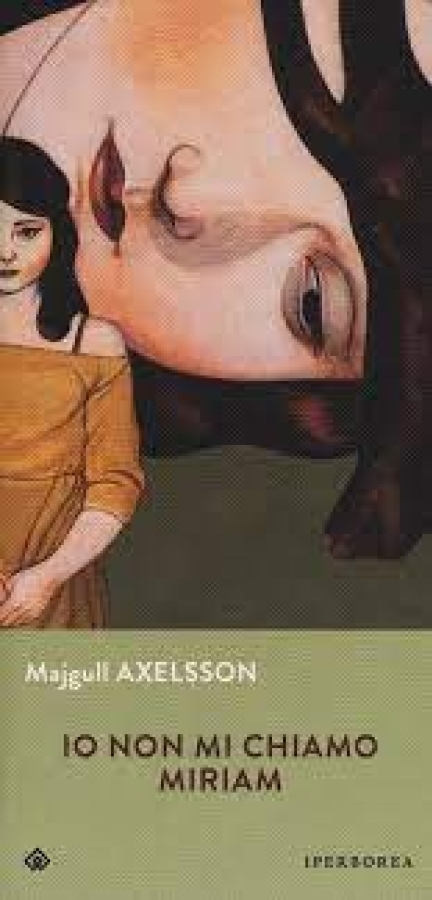
My Name Is Not Miriam
> She sees herself sitting in her lovely living room, in the lovely villa Olof inherited, with the lovely furniture she bought because he earns well. (...) The plaid skirt turns into a striped prisoner's dress, the stockings vanish and her shoes slide into nothingness, the parquet floor beneath her feet suddenly becomes raw concrete, (...) and Miriam screams, screams and hears herself screaming, clapping her hands over her mouth to force herself silent. It is not merely that memories of Ravensbrück and Auschwitz continually resurface; Miriam carries the weight of a lie, and of betrayal. To everyone, even her son and granddaughter, Miriam is a Jewish woman who found refuge within hospitable, orderly Swedish society; in reality, she assumed the identity of a dead girl who bore a brand similar to that of Malika, her young Romani self; no one would have welcomed the deportee Malika, belonging as she did to a people considered the lowest among all the world's pariahs (thieves, perjurers, child-abductors, violent, and so forth). She is eighty-five years old when she is gifted a bracelet—a piece of Gypsy craftsmanship. > Tears well up in her eyes, forcing her to blink them away, and words flash through her mind, (...) then she lets those words rise to her lips. The truth, instantly retracted, sets in motion a narrative that unfolds along two parallel strands: the long walk with her granddaughter, who seeks to probe what lies behind her grandmother’s cryptic declaration, and the inhumanity of the concentration camps, which must be banished from the soul if one is not to be overwhelmed. > You cannot talk about everything! (Miriam cries) You have to understand that. Not if you are eighty-five years old and belong to the wrong race, (...) Do you understand or not? It really happened. It was all real. It was another world, and I do not want to go back there. And so Auschwitz bursts into her mind—where her cousin was murdered immediately, where her little brother was used as a human guinea pig, and where the Romani people revolted, only to be exterminated en masse in the gas chambers; then the Ravensbrück labor camp, where, alongside the ruthlessness of the female guards, she—so mistrustful—encountered friendship and solidarity. Yet the dead always return; they stand behind doors easily pushed open. > All right, then. Let them come. She may be old, but she is still capable of slaying a few ghosts of the past. (...) Yes, it is her, it really is Anuscha (the murdered cousin). She is ten years old and nothing bad has happened yet. (...) When she reaches for the handle her hand moves clumsily and tears lurk in her throat, but then the door opens, swings wide, and Else appears (her friend from the concentration camp). She is still tall and thin as a rake, but she looks healthy and full, wearing clothes that are intact. (...) We are destined to lose everything, even the people who matter most to us. And so she no longer tries to hold back her weeping; reaching toward the fifth door, she lets the tears flow. Inside, Didi awaits her (the little brother reduced to a guinea pig). (...) She is a traitor. (...). Hence her shame. She betrayed the dead. She betrayed her people and her language. (...) On one side are them. Yet on the other remain those she never betrayed. Anuscha. And Didi. (...) I still miss you, every single day. As Elsa Morante writes in *Menzogna e sortilegio* (see the review on this site), > the past and the future are two realms of mist and vertigo, which the living can explore only through imagination and memory. What purpose is served by plumbing this palace of death? > No, said her father in a voice that came from a distant place. No, do not remember. Forget and look forward. To do this, one must deceive and betray. And Morante once more: > a lucid insomnia takes hold of me, and in this hushed, depopulated room, from now on I shall interrogate nothing but my true memory. Keeping her secret her entire life, shrinking from the temptation to reveal the truth, is the only way to safeguard her grief: the immense suffering born of the loss of her loved ones, and, bound up with them, her belonging to a people—the Romani—despised and trampled upon. The narrative structure follows a circular arc: the author returns repeatedly to the same themes, situations, and characters, pursuing a social and introspective investigation through successive approximations. The section dealing with life in the concentration camps relies on documentary sources and often takes on the qualities of a chronicle; perhaps it could not have been otherwise, given that the author is not recounting a true story, nor did she experience the camps firsthand. Interviews with survivors allow her to lend depth to the narrative, particularly when depicting the daily lives of the female inmates and the relationships woven among them. Elsewhere, as in the depiction of the Romani uprising, the prose falls flat and predictable. By contrast, the section concerning Miriam’s life in Sweden strikes a different chord: fiction grants the storytelling room to breathe, taking on color and substance because the author knows this social and cultural landscape intimately. A subtle irony emerges regarding Swedish customs, brought into relief by Miriam’s mimetic gifts: a young woman adept at reading body language, vocal inflections, and the behavior of a people—the Swedes—otherwise so utterly foreign to her. What causes disarray is the relentless shuttling between present and past, between reality and remembrance; perhaps a more linear narrative structure would have served the reader better. Why read it? An important, groundbreaking book that reaches far beyond the conventional history of the Holocaust.

I am god
> Wars end. Hate lasts forever. Hatred harbored for years had driven a man to litter a city with bombs. Hatred had driven another to detonate them . The consequences of that insane game that is war provide the ideal backdrop for a thriller. The novel’s premise is the return of a Vietnam veteran, surviving yet monstrously disfigured by napalm, the incendiary weapon widely used by the Americans during the war. As one would say today in polite terms, it was "friendly fire" that reduced the man to the horrific state in which he finds himself: taken prisoner by the Viet Cong and used as a human shield, he was struck by units of his own army, despite their having clearly recognized him. Hatred and vengeance are unleashed against his own fellow citizens, as he confides to his only friend: > I believe it would take the lives of many men to feel the pain I felt in those few months in the hospital . Many years must pass until a series of explosions strikes New York, claiming numerous victims. The investigation is assigned to a young detective, Vivien, who is partnered with Russell, a failed writer from a wealthy family who has come into possession of information crucial to identifying the culprit. As is typical in thrillers, the novel unfolds along two parallel narrative threads: the unraveling of the police investigation, full of plot twists and intricate developments, and the personal lives of the two protagonists, who ultimately fall in love. Among the story’s many offshoots, there is also a priest who reportedly took the killer's confession regarding the murders: the conditional mood is necessary here, as this very confession is the novel's pivotal juncture, one that might allow an attentive reader (certainly not the undersigned, who failed to grasp it) to deduce the killer's identity. The novel is undoubtedly the finest Faletti has written: the story is well-constructed, the plot rich with incidents and characters that nonetheless weave smoothly into the overarching narrative. The prose is even and composed, simple yet effective at the same time. If a criticism must be made, it concerns the novel’s finale, which, as is often the case with thrillers, is insufficiently developed and arrives devoid of tension and suspense. Perhaps the author should have devoted greater care to the conclusion, even at the expense of trimming some of the book’s redundant passages. Why read it? It reads exceedingly well, and the narrative commands the reader's attention.
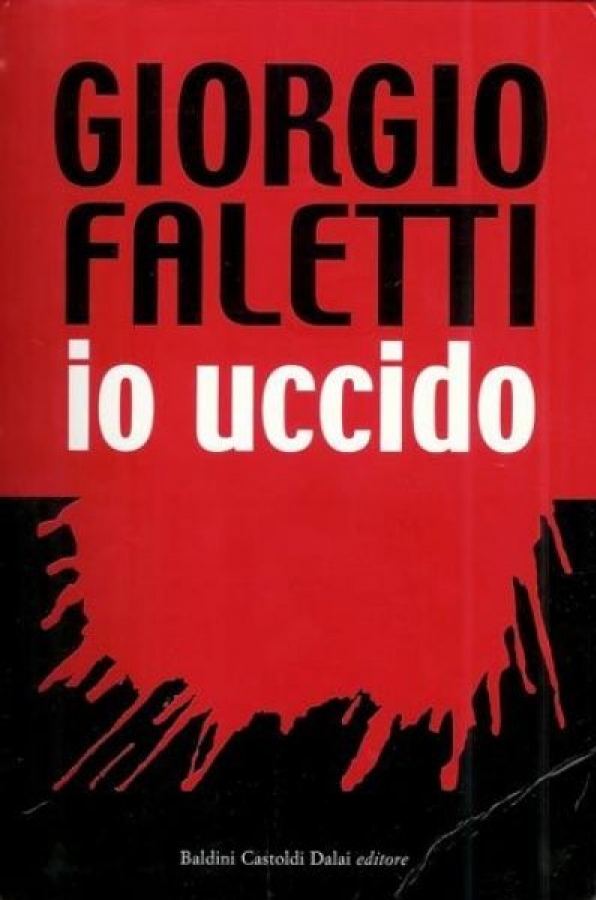
I Kill
The novel concerns a string of murders committed in Monte Carlo by a psychopath who slaughters a series of celebrities in the grip of a vengeful delirium, seeking to restore a face to his brother, born ill-fated and murdered by their father. An American agent finds himself heading the investigation amidst a tangle of subplots and plot twists. It is a quintessential genre novel, echoing the style and narrative pace of books by Ludlum, Le Carré, and the like: a detective story that relies neither on setting (here reduced to the bare essentials) nor on in-depth character development, nor, ultimately, on suspense. Instead, it relies on narrative velocity and, in this case, on pleasant, lucid prose. It is a good book, perhaps overly long (as novels of this genre tend to be), redundant (for instance, from the discovery of the killer’s identity up to his apprehension), hurried (in how the protagonist uncovers the killer’s identity), and ultimately rather implausible regarding the final confrontation between the protagonist and the “villainous” general. Other passages firmly capture the reader's interest and attention: the initial murder aboard the boat, the phone calls to the radio station, the French commissaire’s search in Aix-en-Provence, and, finally, the killer's capture. At last, Italian literature too has entered a literary genre that has enjoyed—and continues to enjoy—immense success both abroad and in Italy.