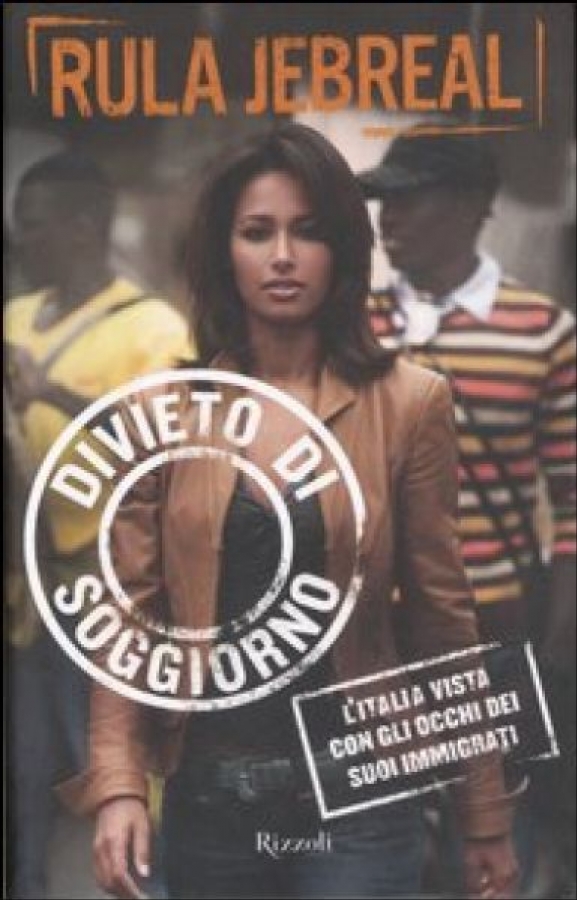
Prohibition of Residence
The book is an investigative narrative, presented through a series of interviews with immigrants. It spans from the Eastern European prostitute to individuals who have achieved success in the economic, social, and political spheres. What emerges is a highly variegated picture, revealing that, paradoxically, integrating and climbing the social ladder was easier for immigrants who arrived in 1970s Italy than for those who have come more recently. In truth, immigration mirrors the deterioration of Italian society: a growing inward turn, indifference toward novelty, and thus a tendency toward an "ostrich" policy—refusing to see that Italy is changing. There are two aspects of the book of considerable interest: the first is encapsulated in the quote cited in the book itself: "We wanted workers, but people arrived" (Max Frisch). As the author notes, it is the cultural and ideological framework underpinning Italian legislation that is flawed: > it is still the economic utility of the migrant's labor that validates their right to live in our country . Or, as a Somali domestic worker puts it in other words: I am treated > essentially well, even though when I told my story I sensed a general indifference. It is a business relationship: I provide a service and they pay me . In political terms, Jean-Léonard Touadi, a commissioner for the Municipality of Rome: > move beyond the logic of social assistance, stop approaching the category of immigrants, however fragile, through the lens of emergency welfare interventions. Instead, each of us needs equal opportunities, access to culture, access to housing, easier access to credit . Yet aren't these the problems of Italians as well? The second aspect concerns how Italians are viewed by immigrants. It is an intriguing perspective, revealing a somber world in which, for example, the elderly have lost much of their authority while spoiling children has become the norm, a division of roles persists between men and women, emotional life is bleak, and indifference prevails. "There is great individual care and little, or rather none, for the collective space." > I happened to share what we eat in my country, and most of the time they looked at me with disgust . The art of getting by prevails, as workers are selected based on referrals from relatives and friends, and consequently > the worker is not chosen based on qualifications and professional training, but as a member of a category of peers sharing the same origin . The book is engaging, yet it relies too heavily on interviews with successful figures and official representatives of the immigrant community, neglecting the essential labor of digging on the ground—that is, among ordinary people. Beneath a clean prose style and a well-constructed narrative, a journalistic weakness and an investigative fragility emerge, lending an impression of artificiality to what is recounted.
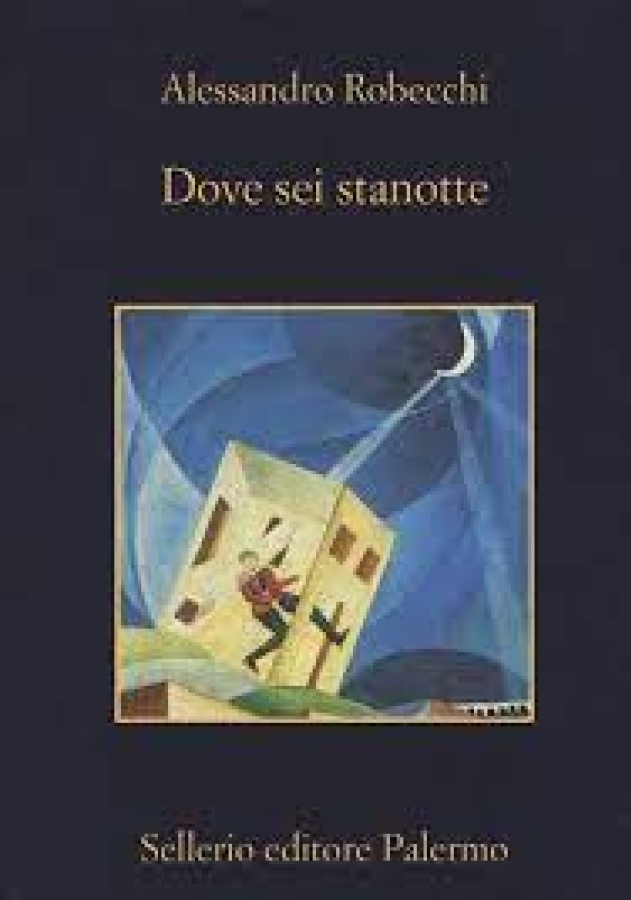
Where are you tonight
> He wears old boots, one gaping open at the toe, like a toothless grin. (...) But ultimately nobody sees him, because in Milan, even with the Universal Exposition and its status as the center of the world, a homeless man pushing a cart filled with his life is merely part of the landscape, and thus invisible . With this image of commonplace social indifference, the novel held out the promise of a Noir with a strong social imprint; especially when paired with another hallmark of Milan as "capital of the world": the world of television and major annual trade fairs, such as the Salone del Mobile. The protagonist, Carlo Monterossi, is a famous producer of a television show that even he despises; he lives in a splendid apartment with an efficient, protective housekeeper: it is a fake, superficial life that could go on forever, comfortable amid parties, fleeting affairs, and self-pity. Until everything is upended. At the end of a party, he finds a Japanese man in his home, dazed and terrified. Who is he? What is he doing in his house? And why is he murdered, and Monterossi's fine residence ransacked? It is from this premise that a Noir sets off, bogged down by an entangled and redundant plot featuring everything except the essential ingredient: suspense. Like a grand mélange of Simenon and De Cataldo (see the citation of *Romanzo Criminale* on this site), we have police intrigue, the secret services, an alienated yet sharp inspector, the cynical, wheeling-and-dealing backdrop of the "Milano da bere," marginalization, illegal immigration, and finally—why not?—even love. In short, it is a miscellany, fortunately seasoned with frequent Bob Dylan quotations steeped in a melancholy romanticism, as in these lines: > In the early morning rain with a dollar in hand / An aching in the heart and pockets full of sand / I am far away from home and I miss my only love so much . The narrative style is dynamic, alternating effective descriptions with tight, rapid-fire dialogue; yet narrative fluency is undermined by the constant entrance and exit of various characters—tiresome and confusing in its repetition—and by the recurrent psychological introspection devoted to Carlo, who slowly evolves from a frivolous dandy into a "real" man. It is, perhaps, an attempt to introduce an inner transformation in the character: a shift that remains unresolved because it is never fully explored, reducing it to a mere literary device. The writing is elegantly simple; it deserved a sturdier, better-constructed story. Why not read it? It is prolix—the worst possible flaw for a Noir.