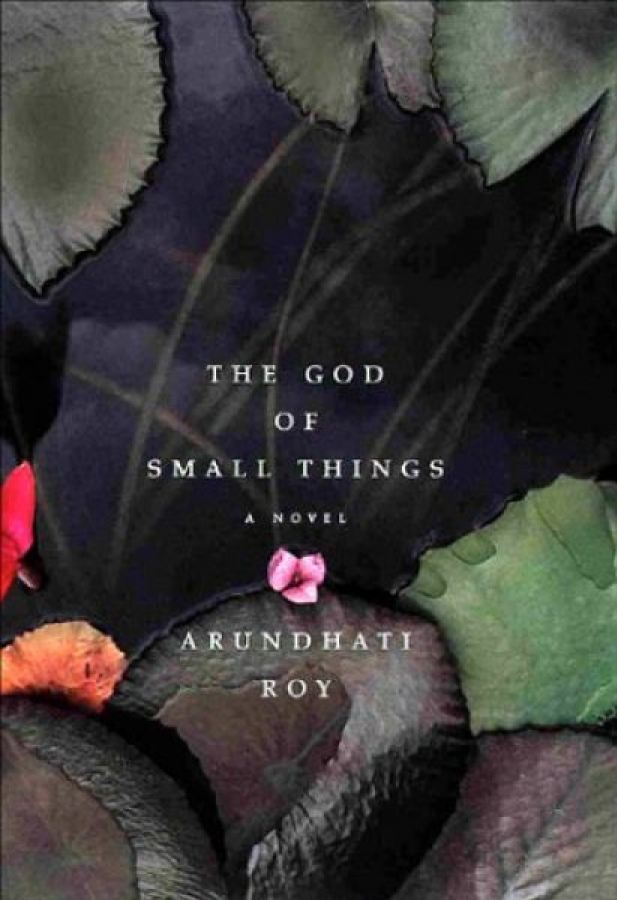
The God of Small Things
The narrative unfolds around an Indian family of the Greek-Syrian faith and takes place in a dimension that is, in some sense, timeless. The point of departure—and also of arrival—is the death of a young girl, Sophie Mol, who arrives in India with her mother to meet her father and drowns in the river during a boat trip with her cousins, the twins Rahel and Estha. This episode forms the watershed between an atmosphere of serenity and the devastation of the family, most notably the separation of the two twins. The almost symbiotic bond between Rahel and Estha is one of the book’s central themes, though more apparent than real. Indeed, none of the characters are analyzed or explored in depth; rather, they remain on the surface, at times in an exaggerated, almost caricatural form. The true protagonists of the book are “the things,” the environment surrounding the characters, in particular the river. The final chapter of the book is titled *The Cost of Living*: the anguish and precariousness that can be endured only through an attachment to small things: > Even later, on the thirteen nights that followed this one, instinctively they stuck to the Small Things. The Big Things ever lurked inside. They knew that there was nowhere for them to go. They had nothing. No future. So they stuck to the small things . The river, the flora, the insects, the birds, a boat, an abandoned house are the small things to cling to, shifting in shape and color according to one’s mood. In this sense, the small things do not reflect the human soul, its feelings and sensations; rather, they take on a life of their own in a dimension alien to Western culture, born as they are of despair. > He was exasperated because he didn't know what that look meant. He put it down to some sort of indifference, some sort of despair. He didn't know that in some places, like the country that Rahel came from, various kinds of despair competed for primacy. And that personal despair could never be desperate enough. That something happened when personal turmoil dropped by at the roadside shrine of the vast, violent, circling, driving, ridiculous, insane, unfeasible, public turmoil of a nation. That Big God howled like a hot wind, and demanded obeisance. Then Small God (cozy and contained, private and limited) came away cauterized, laughing numbly at his own temerity. Inured by the confirmation of his own inconsequence, he grew resilient and truly indifferent . The style and narrative rhythm oscillate between two extreme poles: a slow and at times muddled progression, with a lush prose occasionally reminiscent of Rushdie (without ever reaching that author’s almost D’Annunzian baroque); and sudden accelerations with a more concise sentence structure (especially in dialogue), as though conveying the author’s haste to make up for the time spent in the preceding pages. Is this style deliberate? It is difficult to say, but it undoubtedly leaves an impression of fragmentation and dispersion that weighs the book down and renders it less accessible, at least on a first reading. Undoubtedly splendid, however, are the descriptions of nature, especially for their attentiveness to its living elements: the insects and the birds.
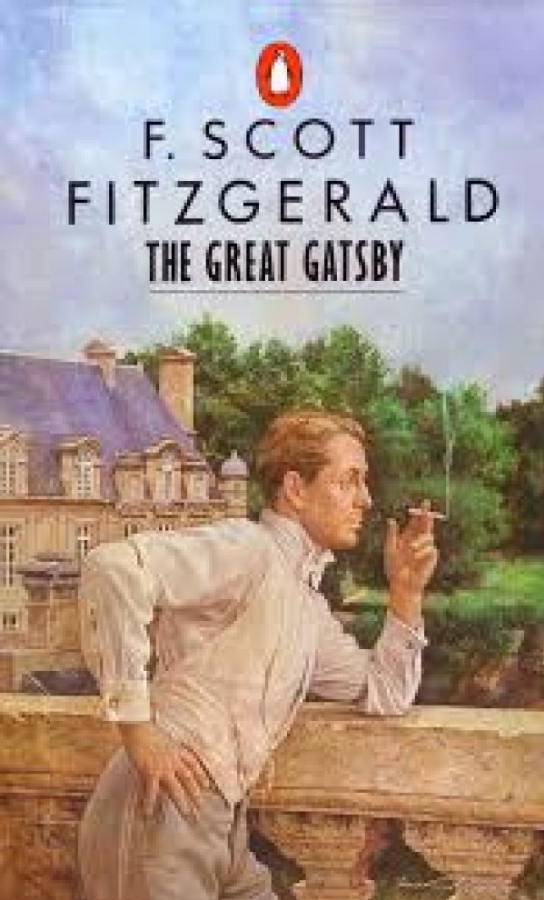
The Great Gatsby
As I set out to read this novel, my mind raced at once to another great book: *Reading Lolita in Tehran* by Azar Nafisi. The author imagines *The Great Gatsby* being put on trial; it stands accused of being the emblematic expression of bourgeois society, of a vacuous and amoral world in which all that matters is self-fulfillment. Over the course of the imaginary trial, one comes to understand that the true theme of Fitzgerald’s novel is entirely different: it speaks of the failure of a dream. Nafisi writes: > dreams.... they are perfect, ideal, complete in themselves. How can you impose them on a constantly changing, imperfect, and incomplete reality? (...) Gatsby wanted to fulfill a dream by retracing the past, and in the end he discovered that the past was dead, the present a disgrace, and there was no future. Was this not similar to our revolution, which had imposed itself in the name of our collective past and destroyed our lives in the name of a dream? These are considerations that would lead us far afield; it is better to turn to the narrative itself. In the rampant New York society of the 1920s, a young man mysteriously appears: seemingly wealthy, he lives in a splendid mansion where he hosts magnificent, crowded receptions; his conversation and his manners are exquisite and formal, so much so that he is thought to have studied at Oxford. Who is he? Where does he come from? What is the source of so much wealth? The most disparate, fantastical rumors spread about him, all imbued with a suspicious fascination with his past. Only the young Nick, the narrator of the great Gatsby’s story, grows fond of the man, because > it was an extraordinary gift for hope, a readiness for love, such as I had never found in any other person and likely never will . One arrives at an acquaintance with Gatsby leisurely, during a party that, in the sum of its constituent elements (narrative pace, dialogue, situations, characters), recalls the volume *The Guermantes Way* from Proust’s masterpiece, *In Search of Lost Time*; but when we suddenly meet Gatsby, the prevailing mediocrity vanishes in an instant. > He smiled understandingly. (...) It was one of those rare smiles that possess a quality of eternal reassurance. (...) It faced, or seemed to face, the whole eternal world for an instant, and then concentrated on you with an irresistible benevolence toward you. It understood you as you wished to be understood, believed in you as you would have liked to believe in yourself. Could the true theme of the novel not be a great friendship—that between Nick and Gatsby? Slowly the story unfolds. Gatsby once had a love affair with Daisy; he left her to fight in the Great War, and also because he was poor and knew he could not aspire to a wealthy young woman. He returned after five years, determined to find his old love again; he is convinced he can win her back, not least because he now has the money to do so. > No amount of fire or ice can challenge what a man has kept hidden in the mysteries of his own heart . Nick’s words, filtered through affection and imagination, lead us to the encounter between Gatsby and Daisy. > He knew that when he kissed this girl, and forever bound his unswerving visions to Daisy’s perishable breath, his soul would never again waver like the mind of God. So he waited, (...) then kissed her. At the touch of his lips she blossomed for him like a flower and the union was complete. (...) I was reminded of something, an elusive rhythm, a fragment of whispers heard somewhere long ago. For a moment a phrase tried to take shape and my lips parted like a mute’s, as though there were no more breath in them than a startled wisp of air. But they made no sound, and what I had almost remembered was incommunicable forever . Such romantic love cannot have a happy ending! Daisy is a shallow young woman; after viewing Gatsby’s vast wardrobe, she begins to weep bitterly: > they are such magnificent shirts, (...) I’ve never seen such beautiful ones before . Gatsby must pay > a high price for living too long with a single dream . He is killed in his garden: > a new world, material without being real, where poor ghosts, breathing dreams like air, drifted aimlessly about... like those white, fantastic figures gliding toward him through formless trees . To understand the great Gatsby, one must begin with the narrator. In his “more vulnerable years,” the young Nick received this advice from his father: > whenever you feel like criticizing anyone, remember that not everyone has had the advantages that you’ve had . Nick interpreted this guidance as a reason to avoid passing judgment, to be merely a spectator; yet he is, in fact, an impassioned young man in search of an ideal; and thus the great Gatsby is the personification of the dream of a young man, reserved by nature, visionary in heart. Through the great Gatsby, he elevates himself above mediocrity, committing himself to the very end in a bond with someone and something. The great Gatsby is a myth, he is the future, he is what we long to be. If the great Gatsby is the product of Nick’s imagination, it is only fitting that the narrative should not be a mere chronicle, but rather rest upon an evanescent, unreal, evocative prose. The plot is mundane, the dialogues are elegant yet often predictable, the characters are stereotypes, serving solely to throw Gatsby into relief. Why, then, such fascination? What captivates us in reading, what leads us into the mysteries of our own hearts and allows us to dream, is the narrative style, the words, the architecture of the sentences: a literary masterpiece. Why read it? Splendid!