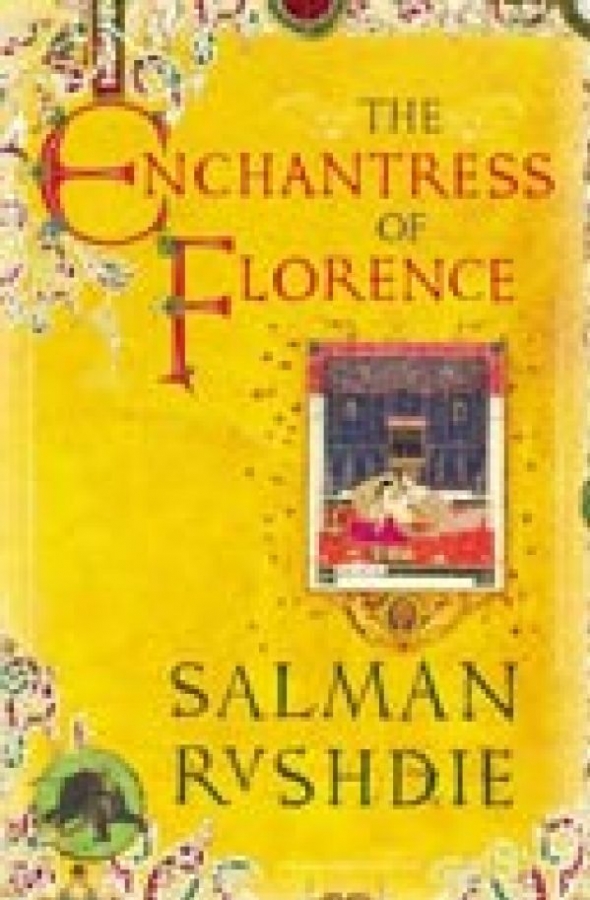
The Enchantress of Florence
We are in the East, in the magical empire of Akbar the Great. > If the war-torn world was a hard truth, then Sikri (the capital of the empire) was a splendid lie . It is a magical world where the mystery of the great sovereign "enchants all the earth, and the future, and all of eternity." Into this wondrous land arrives a traveler hailing from the West, who calls himself Mogor dellʼAmore. He enchants the sovereign and the entire court with tales of an incredible city, Florence: > for him knowledge was of no use, except to remind him of what should never be forgotten: that sorcery requires no potions, familiar spirits, or magic wands. Language made of silver words is enough for enchantment . Mogor dellʼAmore tells of three young Florentines: one of them leaves his native city in search of adventure and becomes a great general in the Ottoman army. In a war against the Persians, he meets a princess who becomes his bride. With this woman he returns to Florence to become the captain of its army. This princess is "the enchantress of Florence," who uses her magical powers to bewitch the entire city. Yet the boundary between sorcery and enchantment is exceedingly tenuous, and soon superstition is unleashed against the woman. What a contrast between the magical world of Sikri and the paltriness of Florence! The princess flees to the New World, but > her magic was no longer strong enough to help withstand temporal forces, just as it was not powerful enough to alter the geography of the earth. No middle passage was found, and she found herself trapped in the new world until she chose to die . Yet even the magical world of Sikri must vanish to yield to the force of reality. > I have returned home after all (said the princess to the great emperor), you allowed me to return, and so here I am, at the end of my journey. End until you are not, said the great regulator of the universe, my love, until you do not exist . Everything can exist within the imagination, even beyond time; nothing can survive in reality. With an imagistic and baroque style, the author narrates an incredible, entirely fictional tale that nonetheless, beneath the tone of a fairy tale, develops three arguments: a) the East is superior to the West, insofar as the East gives expression to the wealth of the imagination; b) fantasy is an enchanted realm that allows one to achieve perfection; c) the movement of history from East to West (from Sikri to Florence, and ultimately to the New World) corresponds to a slow, inexorable decline of civilization. The individual words and the phrasing captivate the reader, yet the events are too implausible and, at the same time, excessively real to enthrall and convince. The digressions—which appear to stem more from a brand of literary narcissism than from the requirements of the plot—encumber the novel, rendering it prolix. Why not read it? Certain pages are delightful, the premise of the book is intriguing, yet it is too fragmented and long-winded to make the overall reading experience genuinely compelling.
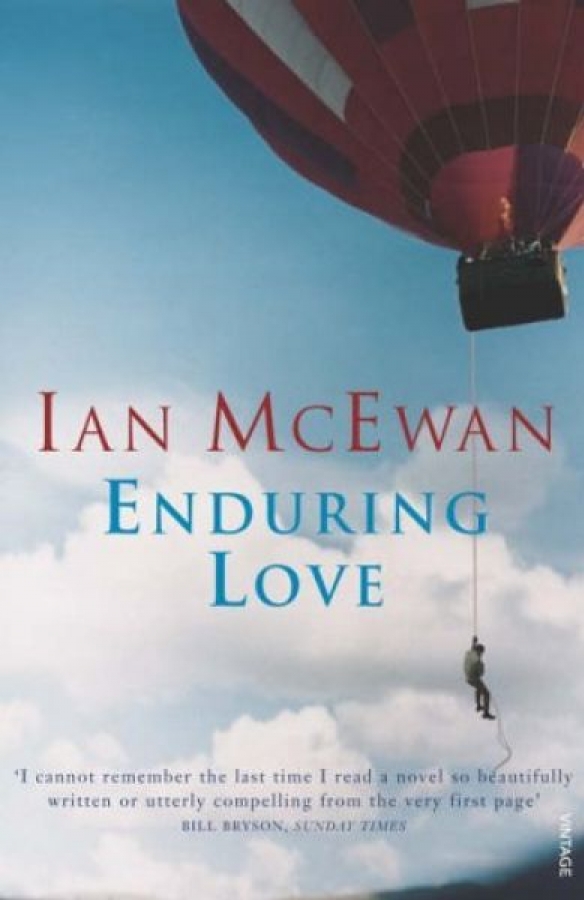
Enduring Love
Like much of McEwan’s fiction, we are confronted at the outset with an extraordinary event (in this case, the death of a person falling from a hot-air balloon) that brings profound upheaval to a life that seemed quiet and settled: the couple’s relationship enters a crisis, an undercurrent of paranoia and instability emerges within the protagonist, and his professional choices are called into question. And up to a point, the novel follows this trajectory, with some truly fine and effective pages on the breakdown of the marital bond; it almost seems as though everything the protagonist endures (in particular, his harassment at the hands of a religious fanatic) were a figment of his imagination, the result of an increasingly pronounced depressive and paranoid spiral. The protagonist discovers himself to be different from who he thought he was. Then, just as the story seems to have reached an impasse, a happy ending emerges—almost worthy of a detective story—but along with it comes the reader’s disappointment. McEwan writes very well, in an English that is simple, fluid, and yet richly expressive: individual pages are remarkable, the whole somewhat less so.