Finished reading on: April 07, 2018
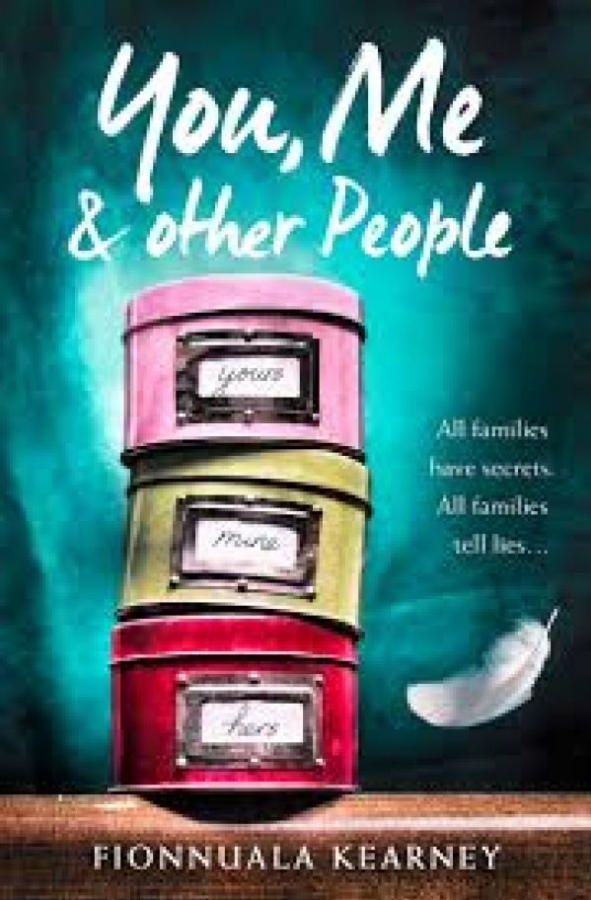
You, Me & other People
AI Translation Notice: This review was translated from the original Italian using artificial intelligence. Book quotes and excerpts are translated interpretations and will not match the author's original English phrasing or official published translations.
Having struggled to finish this book, I find myself asking: are we men such narcissists that we think only of ourselves even when declaring our love and begging for forgiveness? At the novel’s conclusion, faced with the self-victimizing grievances of Adam, the feckless husband (my parents “didn't love me enough, and lately, neither did you”), Beth, the betrayed wife, takes his hand and declares,
I loved you with all my heart.
(...) The problem was never how much, or whether, I loved you.
It was the way you returned that love.
You put yourself first, not me
.
Betrayals, secrets, and lies run through the entire narrative.
Beth has discovered that Adam had been cheating on her for some time with another woman, younger and endowed with great erotic allure.
She throws him out of the house: Adam despairs, yet does nothing to win his wife back, nor does he abandon his mistress.
Adam had an affair many years earlier: by his account, a fleeting encounter which nevertheless resulted in a child.
He saw no reason to tell his wife because, as he claims once uncovered, the child’s mother wished to raise him alone.
Leaving aside the fact that this woman is the primary client of his investment fund (hardly a casual affair, then!), Adam is forced to disclose the secret: the boy has leukemia, and only a bone marrow transplant from his half-sister (Adam and Beth’s daughter) offers any hope of survival.
Adam had always told his wife that his parents died in a car accident: naturally, this is not true; they committed suicide.
Let us recap: he betrayed Beth, concealed the fact that he had a son, and hid the truth regarding the real reasons he was orphaned.
As if that were not enough! Beth decides to sell the marital home; while moving, she finds photographs and gifts for the boy among her husband’s belongings, proving that Adam had followed his son’s life all along.
Yet another lie! And there are still more, which we shall spare the poor reader!
Alongside Adam’s secrets and lies are the stories of other characters, beginning with Beth’s experiences and emotions.
While the others evolve and change, freeing themselves from the past and finding new paths, Adam remains stagnant: he proclaims his love, takes forgiveness for granted, and is astonished not to be welcomed back.
And Beth? True, she has built a new life, yet she turns her ex-husband away with maternal gentleness, almost with a sense of guilt.
And so I wonder: could it be that we men are simply made this way—fatuous, self-centered, fragile, and ever eager to elicit pity, because women's affection for us is boundless?
The plot is excessively cluttered with events, many of them implausible, at the expense of psychological depth, leaving the characters repetitive and predictable.
The structure weighs the novel down considerably: the chapters alternate the first-person perspective—Beth in one, Adam in the next, and so on throughout the story.
This literary device, ostensibly original, fails to generate narrative momentum; furthermore, dialogue dominates, amounting essentially to soliloquies in which the interlocutors serve as mere megaphones for the narrating “I.”
It almost seems as though the author was incapable of analyzing the characters or the context (which is utterly deficient) and defaulted instead to conversation: a mode that cannot sustain narrative prose, unlike the theater, where flesh-and-blood actors lend vitality to the characters.
Why avoid reading it? An implausible and superficial story, a tedious narrative pace, a prolix tale.