Finished reading on: July 17, 2011
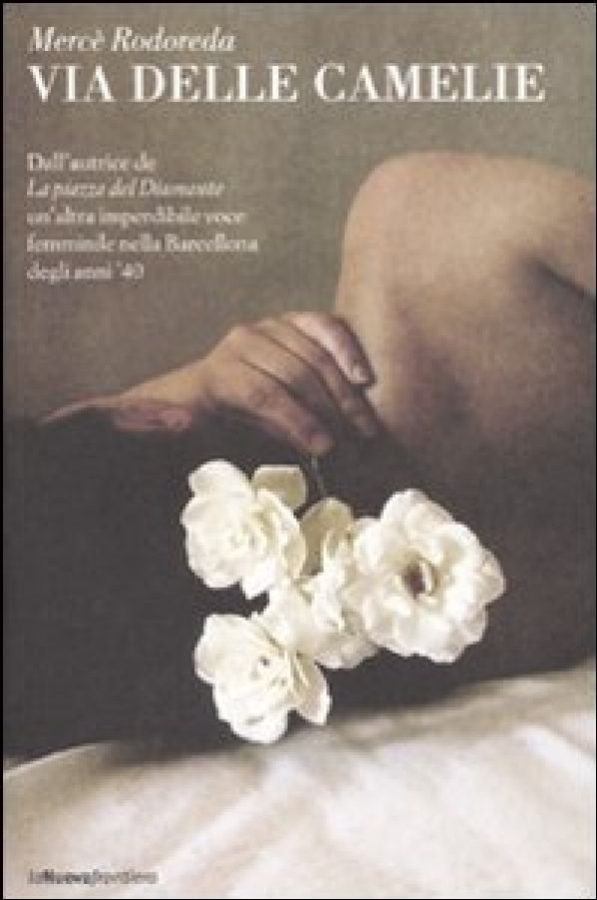
Camellia Street
Title of the original version reviewed: «Via delle Camelie»
AI Translation Notice: This review was translated from the original Italian using artificial intelligence. Book quotes and excerpts are translated interpretations and will not match the author's original English phrasing or official published translations.
Cecilia was abandoned as an infant on the doorstep of a couple, Señor Jaime and Señora Magdalena, who raised her as a daughter.
Her appearance and her name, found on a note left inside the cradle, are a mystery: why Cecilia? Perhaps her father was a musician, or else «he must have been a very wicked man and that I had the ears of a criminal».
Cecilia feels like an outsider, attuned to the world (flowers, the fragrance of gardens, stars, dresses, and sets of jewelry), but not to mankind.
Era come se la casa e i signori che mi avevano raccolto, con le tazze di tiglio e la torretta e la poltrona gialla e la storia della spilla da balia e del biglietto fossero una di quelle storie che si raccontano ai bambini per fargli paura nelle sere dʼinverno o per farli ridere, secondo come viene
.
An existential loneliness hangs over Cecilia, leading her to love only herself: observing her teenage reflection in a mirror, the girl realizes she is different from others, because «I was the one who made people fall in love, and inside the mirror I was the one in love».
This emotional self-sufficiency leads Cecilia to drift, first accepting loveless romantic relationships, then turning to prostitution, and ultimately becoming the opportunistic mistress of wealthy, powerful men.
Cecilia endures a joyless existence, a «living until death».
And it is precisely the weary awareness of the futility of her existence that prompts the woman to retrace her steps in life to investigate how she had been abandoned, to unravel the mystery of her birth—the root of all her suffering.
And she discovers that many loved her, that her adoptive parents were shattered by grief over losing her, and that her appearance and her name had a thoroughly mundane origin.
A night watchman «had found a baby girl, like a kitten, who would be named Cecilia».
In the novels of Mercè Rodoreda, there is always an initial, almost primordial wound that shapes the protagonist's entire life.
In this case, the existential angst is the very meaning of birth: feeling that we do not know where we come from breeds a sense of estrangement toward humanity, an inability to forge authentic relationships—something Cecilia manages instead to achieve with objects and animals.
Yet why not accept that we are all born like kittens, and that our true parents are those who took us in with affection?
It is a demanding novel, with a slow narrative pace and rich in symbolism, rendering it frequently cryptic and elusive.
There is never a shift in tone, never an acceleration, almost as if the plot simply rolls on like life itself, which, as the author puts it, consists of «many days».
Why not read it? It is so surreal and cryptic as to be tedious.