Finished reading on: November 01, 2022
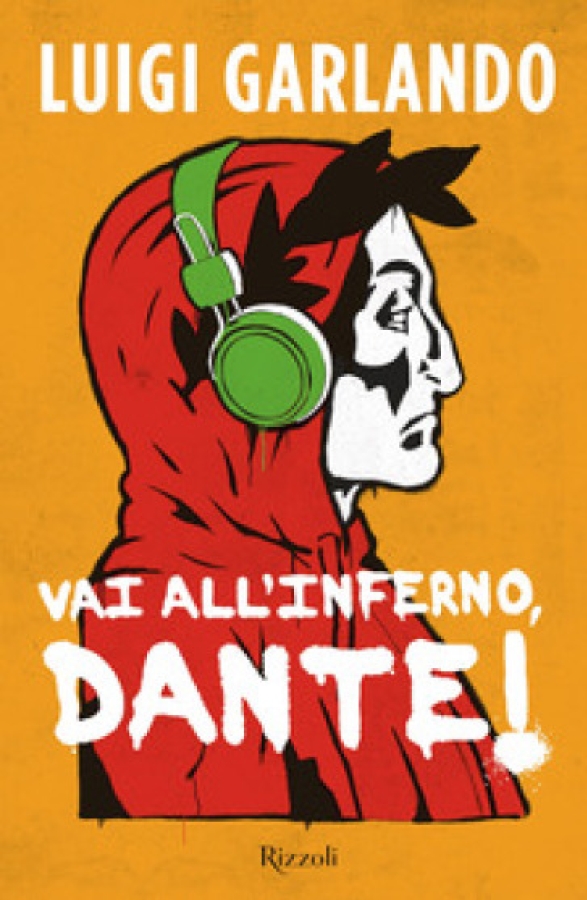
Go to hell, Dante!
Title of the original version reviewed: «Vai all'inferno, Dante!»
AI Translation Notice: This review was translated from the original Italian using artificial intelligence. Book quotes and excerpts are translated interpretations and will not match the author's original English phrasing or official published translations.
Vasco Guidobaldi, scion of an ancient and wealthy Florentine family, is a spoiled, arrogant, and selfish adolescent, accustomed to always having his way—at home, at school, and with his friends. Having recently lost his mother, his father has retreated into deep isolation; beneath the veneer of a carefree boy lies acute suffering, a blend of remorse and resignation. He vents his rage through Fortnite, a video game, a virtual battlefield where he often emerges victorious.
To clearly separate my real life from Fortnite there is no river, there is no mountain, but only an imaginary frontier that I often cross without realizing it....) I like the game, because the adrenaline rushing into my gut drives away the lion gnawing at my heart, just as hatred does when I play Fortnite. At least for that hour.
When, out of nowhere, a new player bursts into Fortnite and wipes the floor with Vasco; calling himself Dante, he issues a warning:
you were not made to kill the B.R.U.T.E./but ever to succumb to Dante's might./Soon you shall know why I have come
. Perhaps too early for the narrative's suspense, we discover that this new competitor is none other than Dante Alighieri himself, descended to Earth at the behest of Vasco's mother, who worries for her son.
In that fair heaven of blessed souls/a gentle shade approached me/with the elegance of fairies./(...) be his guide as Virgil was to me, /teach him love and wisdom,/as though he were your son and not mine. (...) This thing drives me wild with joy, but also just drives me mad. It’s as if I saw her through unbreakable glass; our hands can draw close, but never truly touch
. And while it is predictable that maternal love works the miracle of redemption, there is genuine interest in the inversion of Dante’s character: from an unwitting traveler journeying toward beatitude through the grace of Virgil and Beatrice, he here becomes the Guide himself along an adolescent's path. His relationship with Vasco, to whom he is both mentor and friend, humanizes the great poet, so often depicted as haughty, aloof, and prematurely aged. It would have been a fine lesson for so many tedious Dantists and pedantic schoolmasters, yet this brilliant intuition is left undeveloped by the author: much like Manzoni’s Unnamed (see the review of I Promessi Sposi on this site), Vasco undergoes an effortless conversion, turning into a well-behaved boy—studious, gentle, ready to offer solidarity and love. Three hundred useless pages follow.
We are presented with a coming-of-age novel in which quintessentially youth settings—video games, soccer, and rap music—are effectively blended with the Divine Comedy, retold in this manner for a teenage audience. The author is clearly an attentive reader of Dante Alighieri, perceptive of the profoundly contemporary resonances of his poem, as when he puts these words into the poet's mouth:
Learn that love is not coin. /A thousand kisses will not make you rich/if with your feelings you remain a miser.(...) I, instead, loved as the sun teaches/who never laid a hand upon the moon/(...) At every dusk, he yields the sky to her
. One feels the full presence of Paradiso, where love for Beatrice, and for the supreme Good, allows Dante to «trasumanar» [transhumanize] and renders him «one who sees in dreaming» (Canto I, line 70 and Canto XXXIII, line 58 of Paradiso). Once again, as in Harry Potter (see the review of Harry Potter and the Philosopher's Stone on this site), the transition from adolescence to adulthood requires the intervention of an external force endowed with magical powers, precluding any autonomous development of consciousness—unlike what occurs in Treasure Island (see the review of Treasure Island on this site). Considering that this book is addressed to young readers, one must regretfully note how, once more, the message remains paternalistic and overprotective, ultimately failing to foster any genuine individual growth.
Why not read it? It is boring.