Finished reading on: October 15, 2025
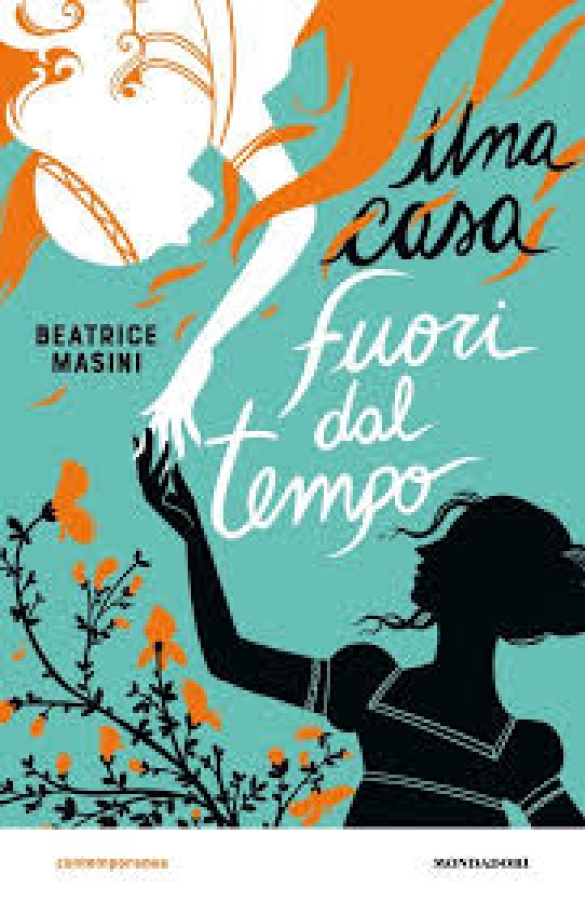
A house out of time
Title of the original version reviewed: «Una casa fuori dal tempo»
AI Translation Notice: This review was translated from the original Italian using artificial intelligence. Book quotes and excerpts are translated interpretations and will not match the author's original English phrasing or official published translations.
He sets off between walls, prey to the light..../perhaps it was you, now it is an apparition/or perhaps it is all that knows no peace/ (...) It is a figure, it has no rest.../it is ours, I thought it a chimera
(from "S'avvia tra i muri" in the collection Avvento notturno by Mario Luzi). These lines come to mind when reading this novel, which speaks of timeless presences, shadows and light dwelling in the realm of the dead during winter and among the living in summer, as in the myth of Persephone. Vera, a timid English girl of the early nineteenth century, certainly could not have expected such an extraordinary experience: becoming friends with Ginestra, whose destiny is to live for eternity like Persephone, poised between the underworld and the world of the living. The story begins in England. Vera is orphaned of both parents and has only an older brother, Caspian, who is passionate about archaeology. Vera studies Italian in the London schools founded by the exiled Mazzini (I appreciated this nod to an important, often forgotten role played by the founder of Giovine Italia). Caspian decides to take his sister with him to Pompeii, where he is engaged in the excavations. Vera wanders freely among the stones of the Roman city when Ginestra appears at her side. Just as in Luzi's poem, Vera becomes aware of Ginestra's sudden presence
not by any sound, because she makes none: what makes her turn around is a draft, an air pocket, like when you are swinging too high on a swing. Ginestra is
as tall as she is, (...wears flat sandals of slightly scuffed red leather...
, but describing her is pointless; it is better to admire the portrait drawn by illustrator Elisabetta Stoinich of the two girls, together, hands affectionately clasped like two friends, jaunty, full of life—Vera smiling, Ginestra faintly melancholic in her Roman tunic and unruly hair, so alike yet so different from Vera in her composed Victorian attire. Yet why is a faint melancholy sensed in Ginestra? The girl knows she will lose Vera with the coming of winter, just as she will never again be able to live like mortals. There is a turning point in the story: the archaeologists succeed in capturing in a plaster cast the figure of a woman who died in the great eruption of Vesuvius; this woman is Ginestra’s mother. Ginestra's eternal vigil has become pointless; having seen her mother again, she can now leave the realm of the dead. She asks the Goddess for permission to depart the cheerful, vacuous sisterhood of her companions; in exchange for freedom, the Goddess demands Vera. Love prevails, and Ginestra condemns herself to eternal imprisonment.
They slipped away from one another, their clasped hands parted, the weave of their fingers loosened. The earth split before them, driving them apart. (...) Instead of letting Vera fall into the chasm (...) Ginestra looked her in the eyes for a long moment. Returning to cold London, will Vera remember her friend and her sacrifice?
Beatrice Masini has written a delicate, subdued, almost evanescent novel. Her passion for Greek mythology and archaeology led her to intertwine Vera's coming-of-age journey—a true rebirth—with the history of the early excavations of Pompeii, suspended between conservation and greed for profit, between new technologies and the grueling, hazardous labor of the workers. One thinks of the evocative figure of little Nico, forced to work while still a child, and the description of the plaster casts, a method widely used in the nineteenth century to both preserve and popularize the works of antiquity. These realistic references frame a story of strong philosophical import: time,
which erodes and leaves nothing intact. Time, which is always hungry, and devours everything. Whereas before -- before, now, after, when it was, when it has been, when it will be -- over there, before, it was, it is all so perfect and polished. Overshadowed by so much metaphysics, the plot ends up crushed, weakened, fragile; the protagonists are not explored in existential and psychological depth, beginning with Vera and Ginestra.
The prose is elegant and musical, aptly complementing the faint melancholy of the story. The sentences are concisely flawless, the vocabulary rich yet modern. The reader glides effortlessly through fine Italian prose, but at a certain point is left wondering: where is the fire amid such stylistic virtuosity?
Why read it? The plot is fragile, but it makes for an enjoyable read.