Finished reading on: April 02, 2017
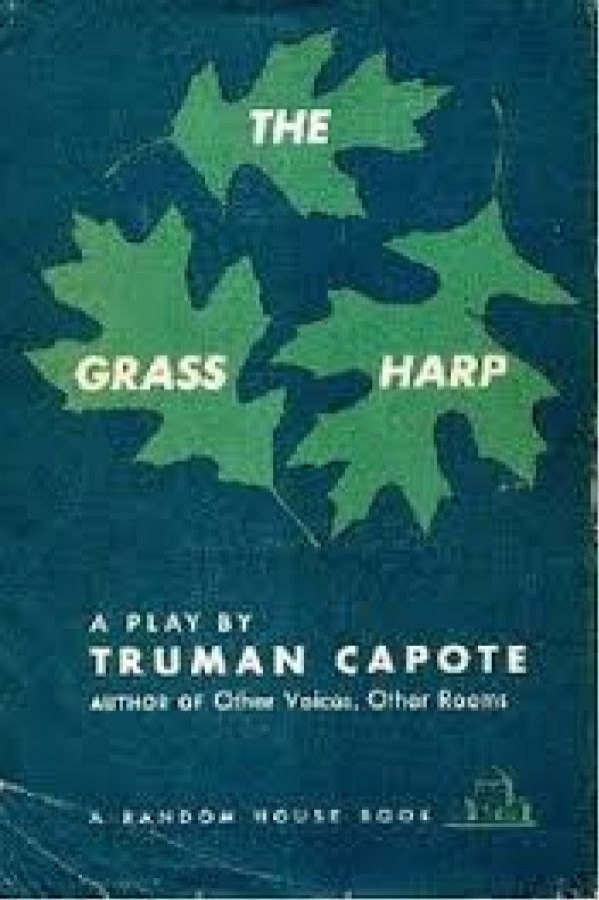
The Grass Harp
Title of the original version reviewed: «The Grass Harp (l'arpa d'erba)»
AI Translation Notice: This review was translated from the original Italian using artificial intelligence. Book quotes and excerpts are translated interpretations and will not match the author's original English phrasing or official published translations.
The Grass Harp is a coming-of-age novel, but it must be read as an assonance of wondrous images and extraordinary sounds, “a harp of voices telling a story.” And all that is left for us is to listen.
As was already seen in Salvatore Satta's The Day of Judgment, remembrance is not a succession of events, a sequence of situations and characters; it is instead like closing one's eyes
to fix their image, (...) a series of ripples, rings that do not evolve with the freedom of a spiral: for me, passing from one to the next was a leap, not a gradual change
.
In this case, the one remembering is an adolescent: Collin.
Orphaned of both parents, he is taken in at his aunts' house in a small country town.
Verena, the younger of the two sisters, is an authoritarian woman, shrewd in business, always ready to impose rules and restrictions.
Dolly, the other sister, is eccentric, with the eyes of
a person endowed with a natural talent, gentle, transparent eyes, of a luminous green color, like crème de menthe
.
And then there is Dolly's only friend, Catherine.
They were always together, and everything they had to say they said to each other: resting my ear against a beam, I could listen to the fascinating tremor of their voices flowing like a hum between the old wooden partitions.
(...) I know: Dolly, they said, was Verena's cross.
(...) Perhaps it was so.
But those were happy years.
(...) If some sprite wanted to give me a gift, he would have to give me a bottle filled with the voices of that kitchen, the ha-ha-has and the whispers of the stove, a bottle brimming with the smells of baking, of butter and sweets, even if Catherine smelled like a sow in heat
.
Verena, ever greedy for profit, wants her sister to agree to commercialize her natural herbal recipes, for which Dolly is famous, but also justifiably protective.
For the first time, the two sisters clash, and Dolly, so fragile and docile, reveals all her stubbornness: she decides to leave, taking Collin and Catherine with her, and chooses a tree as their dwelling:
spacious, sturdy, (...) it was like a raft floating on a sea of branches, (...) Dolly knew, and made sure I knew, that it was a ship, that being in it was sailing along the cloudy shores of every dream, (...) we belonged to it, just as the sunlit branches belonged to it, a nest for night birds.
It is a scandal, clearly a revolt—against Verena and against the whole town.
And indeed, several times the sheriff, the reverend, and the townsfolk gather beneath the tree to convince Dolly to come down.
The situation becomes even more awkward when an old retired judge joins the “revolutionaries,” who in turn allow a strange and large family of wanderers to camp near the tree.
The orderly life of the town is disrupted.
Things escalate to physical confrontation, to forceful action; Catherine is arrested.
In the end, Dolly will be the one to decide: her wisdom, and her affection for her sister, for Collin, and for Catherine, convince her to come down, not least because Verena has realized she was in the wrong.
The story concludes with Dolly’s prolonged illness and her death.
It is time for Collin to leave.
What does the tree symbolize? Many things: freedom, dreams, nature, and especially a bond so powerful as to outlast death: that between Collin and Dolly.
I would have invented someone, a story to find her again, because she seemed to be moving forward into the future, while I was unable to follow her in my monotonous stillness
.
Yet as I went on writing
we flowed together again like a stream of water that an island had divided for an instant
.
As had already been seen in The Great Gatsby, the eye of the young narrator—an adolescent—illuminates through imagination the figure of a modest provincial woman and an ordinary treehouse built by other boys at play.
Imagination is the most powerful means (the only one?) to transfigure reality and make us happy.
The first chapter is splendid; after that, the narrative proceeds slowly, devoid of rhythm, bogged down by too many digressions and the entrance of an excessive, redundant cast of characters.
In short, the writer drags things out, failing to develop the ingenious premise of the treehouse as a refuge and a realm of dreams and freedom.
Perhaps it was detrimental to insist on constructing a plot rather than surrendering to the mysterious atmosphere of the woods: too much prose, too little poetry!
Why read it? It is worth reading for the first chapter alone.