Finished reading on: July 30, 2010
Vermilion Red
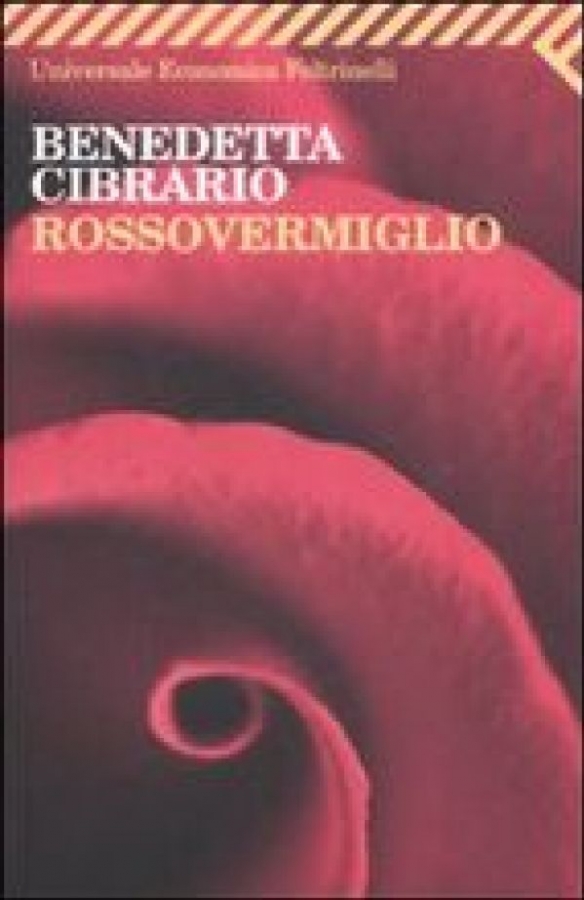
Title of the original version reviewed: «Rossovermiglio»
AI Translation Notice: This review was translated from the original Italian using artificial intelligence. Book quotes and excerpts are translated interpretations and will not match the author's original English phrasing or official published translations.
I feel as though I have lost myself in an underground cave full of perilous crevices and labyrinthine hollows unknown to me, so many chasms into which I might slip.
Questo mi succede adesso, quando guardo avanti e mi accorgo che non cʼè più strada, e allora mi volto indietro e vedo che di strada non ce nʼè neanche lì
.
The protagonist, the first-person narrator, is now an elderly woman living on an estate in Tuscany where she has succeeded in producing a wine of great quality, Rossovermiglio.
Her mind now frequently wanders back to distant times, and the novel unfolds, indeed, through a continuous alternation between present and past.
Born into an aristocratic Turinese family, she marries very young to a man of her own social station.
It is an arranged marriage that will bring the young woman nothing but misery.
Betrayed, wounded in her deepest sensibilities, repulsed by the coldness of her husband and of a formal, vacuous social class, the protagonist decides to take refuge in Tuscany on an estate inherited from her brother.
And here she leads an isolated life, with her beloved horses and a growing passion for the land.
When a man with whom she had once been infatuated reappears.
An affair begins, and the young woman finds herself pregnant.
Yet the man disappears, and the woman, to preserve propriety, decides to pass off her own child as that of the estate bailiffs.
Why did the man disappear? Up to this point, the protagonist appears as a “sleeping beauty”: young, wealthy, restless, slightly eccentric, over whom the great shifts of history—such as fascism, the world war, the partisan struggle, the dawn of the republic—merely glide.
Yet at the very end of her life, the protagonist discovers that the man she loved disappeared because he received a handsome sum from her husband, who, even from afar, meddled once more in her life.
She was condemned to live as others dictated.
From her social class she received nothing but sorrow and deceit, while she is surrounded by the affection and loyalty of the local people.
Only the land (the vines, the olive trees, the woods) is something steadfast and true.
At times I dismount from my horse and sit on a stone, and I remain there looking at this land, unchanged through time, with these colors and these scents, slow and silent as I have known it
.
Yet on the other hand, “we do not live tragedies, we only have sorrows.”
At the beginning of the novel, the reader is left somewhat disconcerted by the vacuity of the events, settings, and characters.
Why should we care about nobles who squander their fortunes on elegant, refined receptions? First comes the prose, exquisitely refined and meticulous, and then the growing discovery that the superficiality and detachment from the present of aristocratic life are the interpretive key to the novel.
We often live a life “made of nothing,” and thus find ourselves swept along by chance and by others.
Why read it? It is written in beautiful Italian.