Finished reading on: December 14, 2024
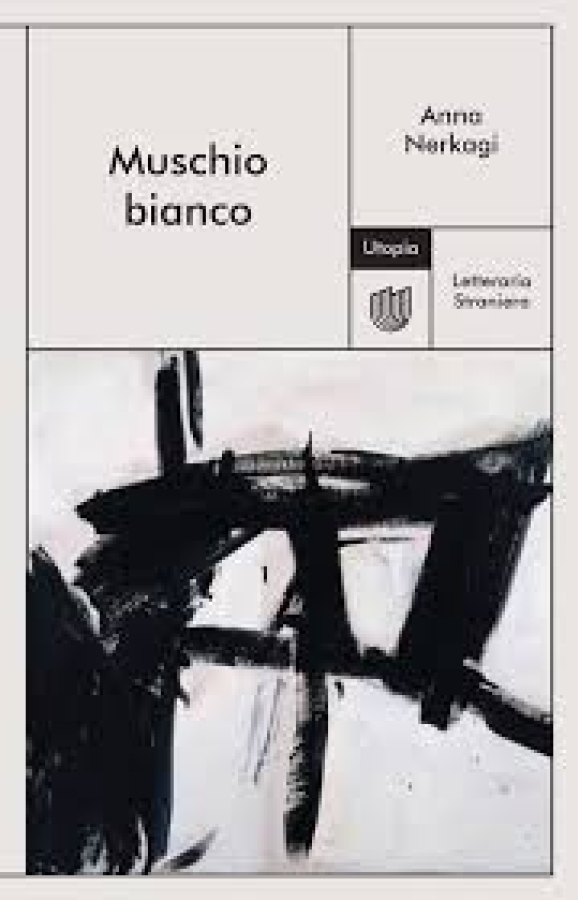
White Musk
Title of the original version reviewed: «Muschio bianco»
AI Translation Notice: This review was translated from the original Italian using artificial intelligence. Book quotes and excerpts are translated interpretations and will not match the author's original English phrasing or official published translations.
To comprehend this literary "gem," one must return to an earlier novel by the author: Aniko, a review of which can be read on this site. Aniko has abandoned her people, the Nenets, to live far away, leaving behind Aleska, her childhood companion, and her father, Petko. The tale begins with the decision of Aleska’s mother to find a wife for her son.
Her husband had died, (...) yet the hearth had not gone out after the master's departure. There remained another task to accomplish (...): to engender a living current that would not scatter or dry up like a puddle in spring, but would continue to flow like a river within its banks. At twenty-six, her son was not yet a true man. (...) He had to be married at all costs. Aleska's heart, however, is weighed down by his love for Aniko. If as a child he felt
like a defenseless fledgling with wings not yet formed
, now he is
a spiteful, wounded vulture. He felt like a bird of prey that, spreading the talons of self-regard, leans against the deaf wall of life without anyone being able to understand his sorrow. At night he dreams of Ilne (as Aniko is called in the book), of her seductive smile, and he possesses her. (...) When he realizes that it is merely a dream and not reality, he is consumed by longing. Longing is like a black, hairy spider. The touch of its legs poisons the soul. The novel recounts Aleska's liberation from awaiting Aniko's return, and it does so within a society—that of the Nenets—now in dissolution, yet still anchored to old values, to the stubborn determination to preserve its own culture. At the center of this world lies the hearth, the fire kept perpetually alight—the woman's duty and prestige; hers is the task of bearing and raising children, hers the burden of preserving and passing on Nenets culture. Hence arises the enormity, for the old mother and the entire community, of a man who refuses to marry, obstinately bound to a "distant" love. The two narrative planes, the individual and the collective, overlap, alternating oneiric moments with choral tales. In the dream,
Ilne stared at him and smiled. She was no longer the same Ilne who had invited him to follow her. A sly, knowing smile, which he had never seen on her face and which for some reason unsettled him, never left her lips. (...) He realized that he wanted to wipe that smile from her face; (...) hers was an invitation to a game of love that was nothing but an illusion. If Aniko turns into a painful remembrance before fading from Aleska's heart, with the surrender of her sledges old Petko declares before the community that Aniko will never return; there is no need to keep the dowry,
ten abandoned sledges (...), like orphans, guilty before men and life. (...) The chum was silent, as though immersed in sleep. Yet the young man knew that, motionless, the two women (the mother and the young bride) awaited him, kneeling before the fire. (...) Parting the tent behind his shoulders with a wide gesture, he entered. Thus enters a boy who has become a man.
There is a hidden protagonist, and it is Aniko. She appears suddenly, unexpected, with a sort of declaration of love in which Nerkagi seems no longer able to restrain her own "I," in a novel where the narrator is "omniscient."
I love old trees, says Aniko, (...) I love them for all the summers gone by, for the mystery of life they conceal, for the murmur of the leaves that might be mistaken for a song or a lament, a confession or a tale. Ancient trees resemble the old. And it would be wonderful to be certain that they, indeed, are still the keepers of that Golden word of truth, forgotten by mankind heaven knows when. Moreover, in this deceptively simple narrative—much as Dante stands behind the figures of the Commedia—there are certain characters behind whom Nerkagi conceals herself. To be sure, one of these is Aleska's mother, the emblem of a stubborn attachment to tradition; yet there is another figure, so delicate as to seem superfluous to the plot. It is the young bride rejected by Aleska, reverent toward the mystery of her husband's soul. Through a splendid simile, Nerkagi thus sings the sorrowful and resigned plight of an unreceived bride:
the girl's world was like that of a tiny flower blossomed by the will of fate at the bottom of a ravine, where the rays of the sun penetrate only in the early morning and the hostile stones exude cold. Covered in a slimy moss, they emit a foul stench and envy the beauty and sweetness of the flower's petals, blind to the light that its corolla radiates into the darkness. I have remained silent for too many years, the author confesses, and now it is time for the moss to turn white.
The style is a gentle flow of words, at times elegiac, at others lyrical, rich in similes drawn from the natural world, from trees and animals; a seemingly motionless nature that contrasts with the shifts in the Nenets world and the enigmas of the human soul. Such is the sweetness of the prose that a kind of metamorphosis takes place within the reader, allowing one to measure oneself against the mystery without deciphering it.
Why read it? Outside of time and space, it is a hymn to our human condition.