Finished reading on: October 10, 2017
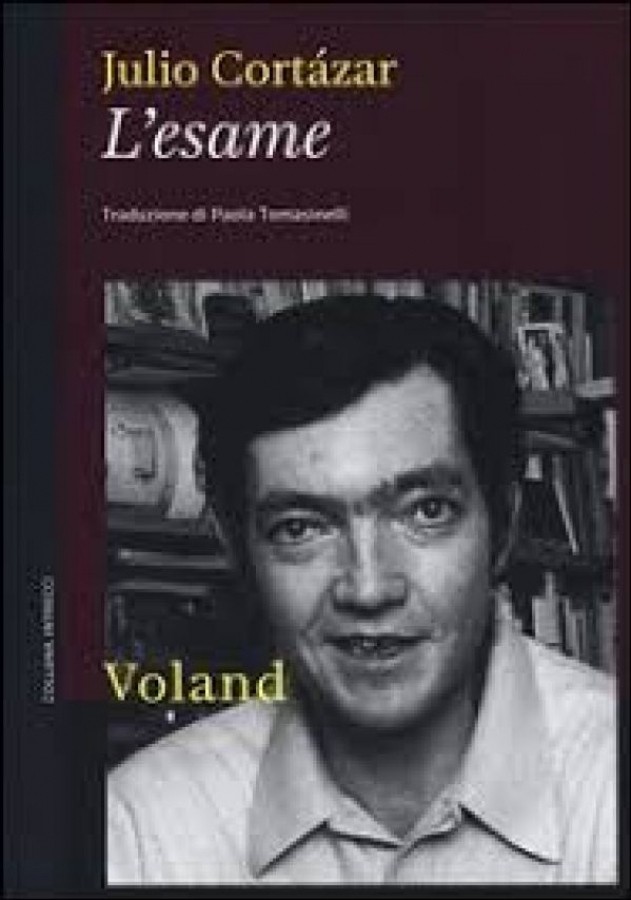
The Examination
Title of the original version reviewed: «L'esame»
AI Translation Notice: This review was translated from the original Italian using artificial intelligence. Book quotes and excerpts are translated interpretations and will not match the author's original English phrasing or official published translations.
I publish this old story today because I hopelessly love its free language, its fable without a moral, its porteña melancholy (typical of the inhabitants of Buenos Aires) and also because the nightmare in which it was born is still awake and roams the streets
.
With this note Cortázar introduces a story written in 1950, during the years of the first Peronism, between 1945 and 1955.
It was a period of profound social change: emerging wealthy from the Second World War, under Perón's leadership Argentina seemed to face a future of development.
And yet, unease and pessimism were growing among intellectuals and within the urban middle class; a moral and psychological malaise born of the muted, tacit awareness of the contradiction between a cosmopolitan city, as Buenos Aires was, and a regime obtusely hostile to culture and individual freedoms.
The characters of the story—the young couple Juan and Clara, Andrés, Clara, and the chronicler—wander through the night in an unreal city, shrouded in fog.
Theirs is a seemingly senseless banter, constantly revolving around the futility of the intellectual.
All this talk, passing papers to one another, these café tables with books and books and books and premieres and exhibitions....
Believe me, there is a swindle here, a betrayal.
All that is left for you is to join betrayal to reality, to life, to action, and with this and an emblem on the jacket lapel you are ready to embark on any career
.
The group has no destination, nor do the events involving them lend a plot to the narrative; alternating between prose and poetry, Argentine, Latin American, and European literary quotations, the youths continue to dwell on the very same theme, in an obsessive and patently futile manner:
a good biologist would laugh his head off hearing our squeaking.
Because we don't even scream; ours is the piping of mice
.
So absurd to talk at random, thought Juan as they stepped out, to hear oneself talk and know that one is never sufficiently in the right.
This is another, perhaps the worst, of our acts of cowardice
.
Juan, you are truly right! Unfortunately, we are weary of so much idle chatter; we would like a bit of reality, of sound pragmatism.
It is for this reason, together with the lack of plot and the shallowness of the characters, that I painfully decided to abandon the book at the end of the first chapter.
The story might well proceed to change its narrative pace radically; I shall never know, so be it! «Free language» is fine, provided it is taken in small doses.
The question that naturally arises for us Italians of the second millennium is this: how much of this story do we find in our own country?
Creation is born of morality, not of ingenuity (says Juan). Ay, ay, went Clara, we are spineless.
Right, spineless, without tension.
(...) I mean that we lack a spirit of system (be it freedom or for freedom), and this is above all a moral defect
.
Why not read it? It is profoundly boring.