Finished reading on: October 05, 2016
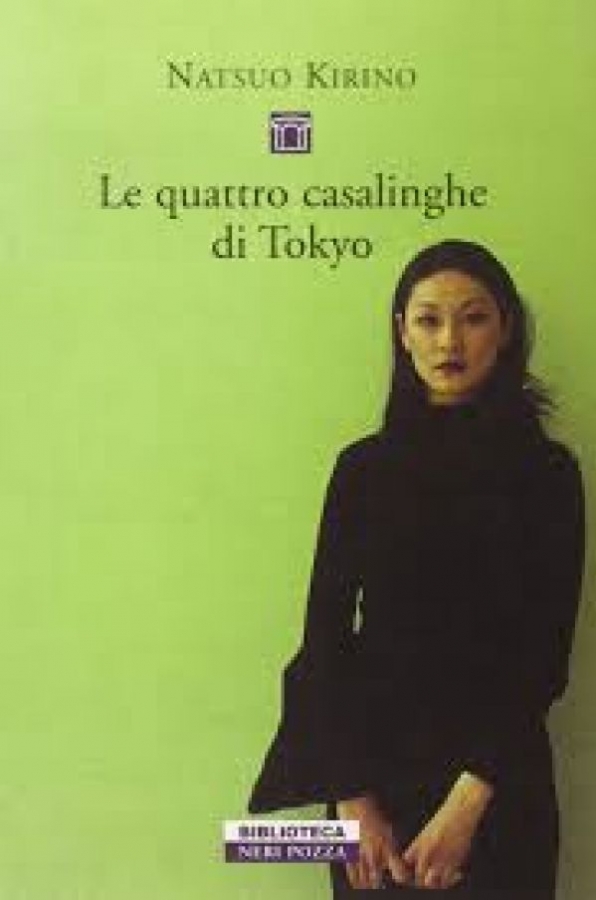
The Four Housewives of Tokyo
Title of the original version reviewed: «Le quattro casalinghe di Tokyo»
AI Translation Notice: This review was translated from the original Italian using artificial intelligence. Book quotes and excerpts are translated interpretations and will not match the author's original English phrasing or official published translations.
Masako, Kuniko, Yoshie, and Yayoi are four housewives; they work the night shift in a food-packaging plant.
It is precisely there that they are introduced to us, across the various stages of production, from their arrival at the factory—always in the dark, gripped by the fear of being assaulted—to the assembly line, attentive to the rhythm of the packaging and the reprimands of the overseer.
A shared habit develops, one that also breeds solidarity, if not friendship.
The four women are markedly different: Masako, hardened and aloof, is a former bank clerk dismissed for her professional ambitions, suffering from a profound loneliness after having been cast aside by her husband and son; Kuniko is mired in debt due to her compulsive spending; Yoshie is a widow, forced to tend to her aged mother-in-law, who loathes her; Yayoi, delicate and gentle, is devastated by her husband’s confession that he has squandered their modest savings on gambling and prostitutes.
One evening, thrown out by the owner of the club he frequented, the husband beats his wife.
Yayoi unexpectedly retaliates by strangling him.
When she thought back to her husband’s face, the belt tight around his neck, right there in the entryway, she felt fabulously, utterly diabolical once more.
Gotcha, serves you right! she thought
.
At a loss for what to do, Yayoi turns to Masako, who lucidly decides to dismember the man’s corpse in order to dispose of it more easily in dumpster bins.
Taking part in the butchery, which unfolds in Masako’s bathroom, are Kuniko and Yoshie as well—partly out of solidarity, and largely for the money.
Quite a way to make violent men pay! But why does Masako help Yayoi? Certainly not for the money.
Out of friendship? Or because she feels
an almost savage desire to make a clean sweep of her relationships with others
? Is there a dark side to her personality that she herself does not know? It seems like the perfect crime, were it not for a petty loan shark who uncovers what happened; Kuniko confessed it to him to clear her debts.
Instead of turning the four women in, the man proposes going into business with Masako: namely, making the dismembered corpses of victims of the yakuza, the powerful Japanese syndicate, vanish without a trace.
Masako agrees.
Had the novel pursued this narrative thread, we would have found ourselves before an original and entertaining tale: ordinary housewives turning a profit from corpses, mostly male; in short, a reversal of roles, a gender vengeance, however macabre.
Instead, the author retreats into a conventional plot.
In their investigation, the police had focused on the man who had thrown Yayoi's husband out: Satake, a psychopath who had served a long prison sentence for stabbing a woman to death while raping her.
Satake had rebuilt his life, but the police inquiry ruins him, not least by unearthing the old, bloody crime.
The man resolves to take revenge.
He easily discovers what the four housewives have done and begins to stalk them.
He is particularly intrigued by Masako’s personality, by her cold detachment and resourcefulness, but also because he realizes they are kindred spirits.
He longs to re-enact that horrific congress with her.
A duel begins between Satake and Masako, in which she maneuvers with consummate skill, even managing to turn the yakuza against him.
Yet one night, she is ambushed and dragged by Satake into an abandoned warehouse.
Is this the end for Masako? We will not reveal how the tale concludes so as not to spoil the surprise; suffice it to say that Masako finally comes to know herself.
Just as she was willing to let herself be killed by him, he wanted to be destroyed by her.
Suddenly Masako understood Satake....
and loved him.
(...) Their eyes met, their bodies became one.
Now in Satake’s eyes she could see only the reflection of herself.
A wave of incredible ecstasy was about to engulf her
.
The opening is promising; the first three hundred pages maintain a relentless pace, with episodes and characters that unfailingly surprise the reader.
A subtle irony snakes through the narrative; the four women are examined in all their ambiguity: fundamentally decent women, criminals out of necessity.
Masako’s personality is commanding—the unyielding, authoritative leader of a pack of terrified women who draw courage from her resolve.
Rivalry, deference, envy, and fear churn among the friends, unsettled by Masako’s utter lack of empathy.
Then the novel lapses into a conventional narrative: it loses its bite, turning sluggish, oppressive, predictable.
One reaches the conclusion exhausted.
Why read it? It is intriguing, yet one can abandon it without finishing.