Finished reading on: August 24, 2014
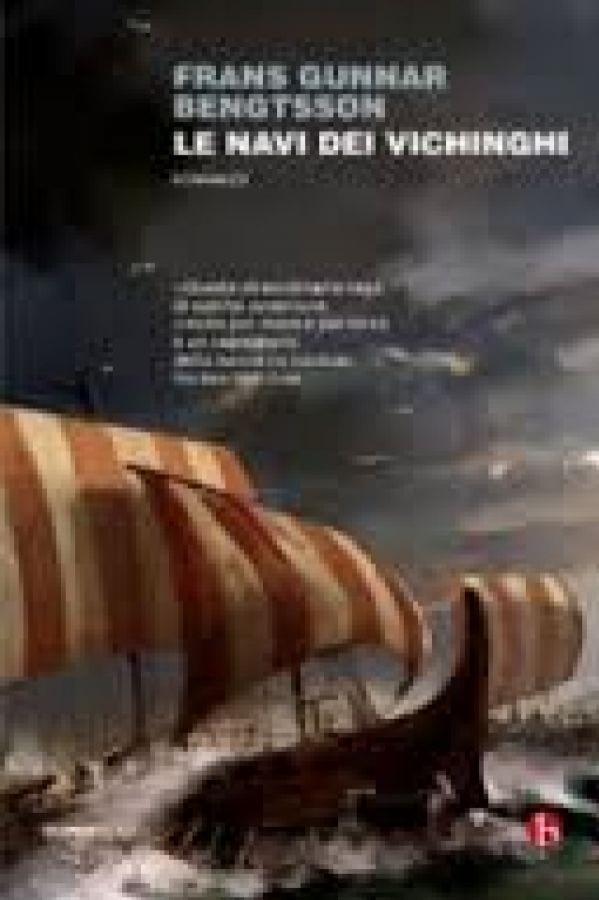
The Viking Ships
Title of the original version reviewed: «Le navi dei vichinghi»
AI Translation Notice: This review was translated from the original Italian using artificial intelligence. Book quotes and excerpts are translated interpretations and will not match the author's original English phrasing or official published translations.
The year is 900 AD.
The Vikings, a people native to Scandinavia, lived off crops, herring fishing, and, for the more restless among them, sea raids—chiefly toward England and Ireland, where they found fortune by the sword, and where many eventually settled.
They were beginning to be touched by the preaching of priests, “shaven-headed men,” who sought to convert them to the Christian faith and to soften their customs, still crude and violent.
The novel recounts the deeds of Red Orm: the youngest son of a wealthy farmer, who, as soon as
spring arrived and the smell of tar began to permeate the air
, would turn his gaze toward the sea and, out of the sheer joy of setting out, “would even compose a verse or two.”
Orm was his mother’s darling, and she did not want him sailing off with his father on perilous voyages, fraught with storms and enemies.
Circumstances dictated otherwise.
In an attempt to defend his flock, he was captured by a ship of Vikings sailing “southward,” toward the Frankish realm and wealthy Andalusia.
Thus begins the first part of the book, recounting Orm’s long voyage.
It was an expedition into worlds still unknown yet already dreamed of: rich lands ripe for plunder.
The Vikings had no fixed destination, and thus the book is not a Nordic version of the Argonautica, as Michael Chabon suggests in his introduction.
Events carried the voyagers along, and they displayed courage, vigor, a knack for seizing opportunity, and a thirst to discover new places and customs.
The account of this long journey is also the story of Orm’s coming of age: from a spoiled, impulsive boy, he grew into a seasoned man and a leader of men.
And so, upon returning home, Orm was fully an adult, claiming mastery over his own fate.
The account of his homecoming opens with one of the most compelling chapters: the Christmas feast at the king’s court.
The clash between tradition and Christianity, between ancestral values and new ideals, emerges with brutal clarity.
The long banquet in honor of Christmas culminated in a series of bloody duels, in which Orm himself was embroiled, defending the necklace bestowed upon him by the Caliph of Cordova.
And it was precisely during his prolonged convalescence that love blossomed between Orm and the king’s daughter—a love that spurred the now-mature youth toward further spiritual growth.
To win the woman he loved, Orm chose to surrender the necklace and convert to Christianity.
It was a momentous choice, for it forced him to take refuge near the great forests,
where kings never come.
It is there that I shall build my church
.
Many interpretations can be ascribed to the novel: a hybrid of fantastical narrative and social chronicle; a chronicle of the transformation of Vikings into Normans, conquerors of England and key players in the late Middle Ages; the spread of Christendom and its attendant ethical and cultural dilemmas; nostalgia for Viking society, crude yet authentic; the wandering of young men in search of their destiny and the pursuit of the new; the portrayal of a man’s long and turbulent life.
Yet the novel’s truest essence is adventure, seasoned with a healthy, dry irony—a detachment that keeps us from taking the heroic figures, incredible exploits, and wondrous discoveries too seriously.
As Michael Chabon writes in the conclusion to his introduction,
adventure is a dish best consumed in the comfort of one’s own home
.
Why read it? The narrative is at times episodic, yet it remains a captivating, epic, and popular tale.