Finished reading on: October 07, 2007
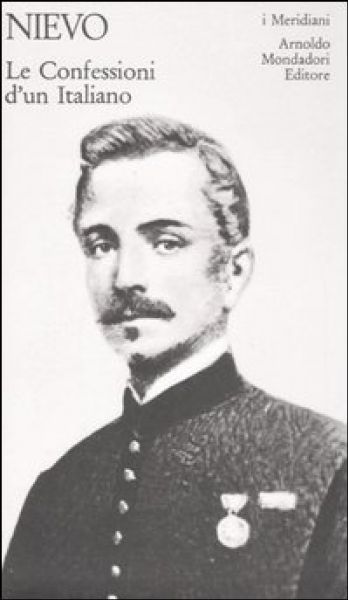
The Confessions of an Italian
Title of the original version reviewed: «Le Confessioni d'un italiano»
AI Translation Notice: This review was translated from the original Italian using artificial intelligence. Book quotes and excerpts are translated interpretations and will not match the author's original English phrasing or official published translations.
Carlino is the natural son of the young Countess of Fratta and grows up in the household of his aunt and uncle, left to the care of the servants and regarded as a «second-class relative».
At the castle of Fratta also lives his cousin, a girl younger than Carlino, named Pisana.
From his boyhood, Carlino falls in love with Pisana, an increasingly vivacious and unpredictable girl who shares a conflicted relationship with him: she seeks his protection and affection whenever she needs it, only to wound his feelings by keeping company with other boys and treating him poorly.
The novel (late 18th to mid-19th century) is the chronicle of this love, accompanied by the nostalgia for a childhood that was poor and neglected, yet happy and carefree.
The political events (the old provincial feudal society, the decline of Venice, the Napoleonic era, the Restoration, etc.
) are important, yet remain peripheral to this troubled but profound bond that unites Carlino and Pisana.
The two come together and part ways, only to reunite in an ongoing struggle of emotions and reciprocal roles that transcends all the upheavals surrounding them, in which they are deeply immersed.
Two themes emerge, typically Romantic yet remarkably relevant today: nostalgia for childhood:
we were happy without effort, happy without knowing it...
for me, it is true, there was also the spit to turn; but I forgive even the spit, and would gladly turn it once more to regain the innocent bliss of one of those blessed evenings, at Martino’s knee, or beside Pisana’s cradle
.
Yet the memory of childhood and of loved ones slowly fades across a long life:
beloved and melancholic shadows of those I loved, you live on in me...
youth remained alive in the man’s mind; and the old man gathered without a curse the experience of his manhood
.
A pervasive sadness therefore dominates, a resignation born of the realization that everything vanishes, just like great love:
forgive me for having loved you in my own way, Pisana says on her deathbed, for having sacrificed you to a strange and inconceivable whim of mine, for having sought in your life nothing but an opportunity to indulge my strange fantasies!...
You were not supposed to understand me, you were supposed to hate me, and yet you endured me!
.
The incomprehensibility of love, of the affection that binds two people and compels them to care for one another despite everything.
And the novel closes precisely with an ode to his love for Pisana:
I glimpse you, bluish and compassionate, in the dying ray of the moon (we are in the height of Romanticism)...
we hoped and loved together...
without you, what would I ever have been?
.
Another theme of the novel is the transition from aristocratic to bourgeois society, the hopes for a free Italy, and the mounting disillusionment with this design.
Yet another theme is undoubtedly the pessimism regarding the Italian spirit, its structural inability to be a free and «ethical» people.
These are, as noted, peripheral backdrops, contexts within which the true central threads of the novel unfold.
If it is true, as Goffredo Bellonci observes, that this is not merely the novel of Pisana—in that the author intends to depict the journey toward a growing consciousness of the individual and of a people discovering within itself the strength for rebirth—it is equally true that the web of human feeling is what confers modernity and enduring relevance upon the novel.
The novel is very long and prolix.
The first two hundred pages (childhood at the castle of Fratta) are very fine: swift, fresh, spirited, and ironic.
They are read in a single breath.
Thereafter, the novel adopts an uneven pace, frequently slow and ponderous, at times superfluous.
The reader gets lost and struggles to read on.