Finished reading on: July 02, 2023
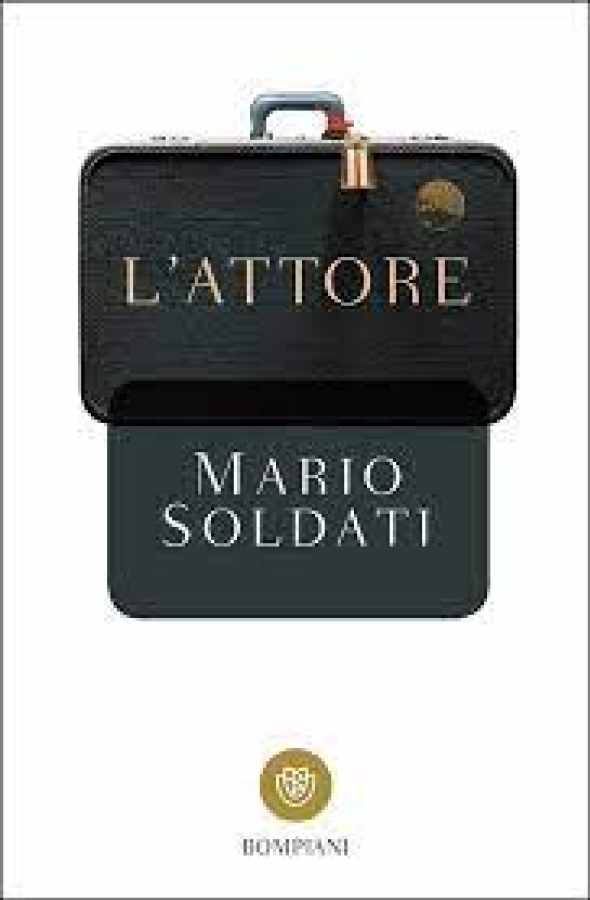
The Actor
Title of the original version reviewed: «L'attore»
AI Translation Notice: This review was translated from the original Italian using artificial intelligence. Book quotes and excerpts are translated interpretations and will not match the author's original English phrasing or official published translations.
Mario Soldati was defined as “the first, great media-man of Italian culture” (Aldo Grasso in Corriere della Sera, 2016). Indeed, he was a novelist, journalist, screenwriter, film director, and television author. His numerous novels (reviews can be read on this site: A cena con il Commendatore, Lo smeraldo, and El Paseo dei Gracia) reflect his vast experience as a cinematic author, both in style and in narrative content. For Soldati, each of us wears a mask, even without realizing it, because the disguise is part of our deepest consciousness; consequently, our relationships with others are ambiguous, often full of futile deceptions; we like to live as if in a dream, as though we were in a soap opera. In short, we live in a bubble. Unlike his other tales, this novel stems from an episode in the writer’s life that could well be real. Soldati, the narrator, meets an old friend, a modest actor whom he has not seen for many years. Enzo is in dire financial straits because his wife continues to lose substantial sums at the casino: he asks Soldati for work. Our writer attempts to find him a role in a television series, though the moment is hardly favorable as new executives have replaced the old ones with whom Soldati enjoyed an excellent rapport. To inform his friend of what he is doing, he travels to Bordighera, where Enzo lives with his wife. In doing so, Soldati finds himself ensnared in an intricate and ambiguous family dynamic: Enzo’s wife, once a beautiful woman, now obese and infirm, is jealous of her husband, whom she suspects of cheating on her with their maid; Giovanna, the maid, dominates both Enzo and his wife through her mysterious, seductive allure; and finally Enzo, who convincingly claims to love his wife yet plays the role of the unfaithful husband, blatantly attempting to conquer the elusive Giovanna, thereby exasperating his wife and driving her toward killing the maid. Why does Enzo pretend to betray his wife with Giovanna? And why do the others play along with the roles Enzo assigns them, as if on a theatrical stage, never interrupting this cruel and false soap opera?
Every man is, always, a bit of an actor,. (...) every human being must, sometimes, to feel alive, be able to imagine themselves a little
.
This novel met with great success upon its publication in 1970 and won the Premio Campiello that same year. In truth, the story is dull and trite; especially if approached from a psychological standpoint: the quality of the narrative falls far below that of Soldati’s other novels. What remain are the splendid descriptions, cinematic in their detail and colors. An example:
Giovanna is small, slender, sturdy, dark-haired. A strange, narrow face: dark, close-set eyes, thin and unpainted lips: a face with a closed, motionless, unfeeling expression, as if carved of stone. (...) She wore an amaranth velvet suit, rather vulgar in its elegance, and very loud. (...) She gazed at herself for a long time, admiring her reflection, pacing back and forth like a model, pulling and smoothing the jacket of the suit over her buttocks, turning once more to glance back over her shoulder.
Why not read it? It pains one to say it: it is boring.