Finished reading on: September 07, 2013
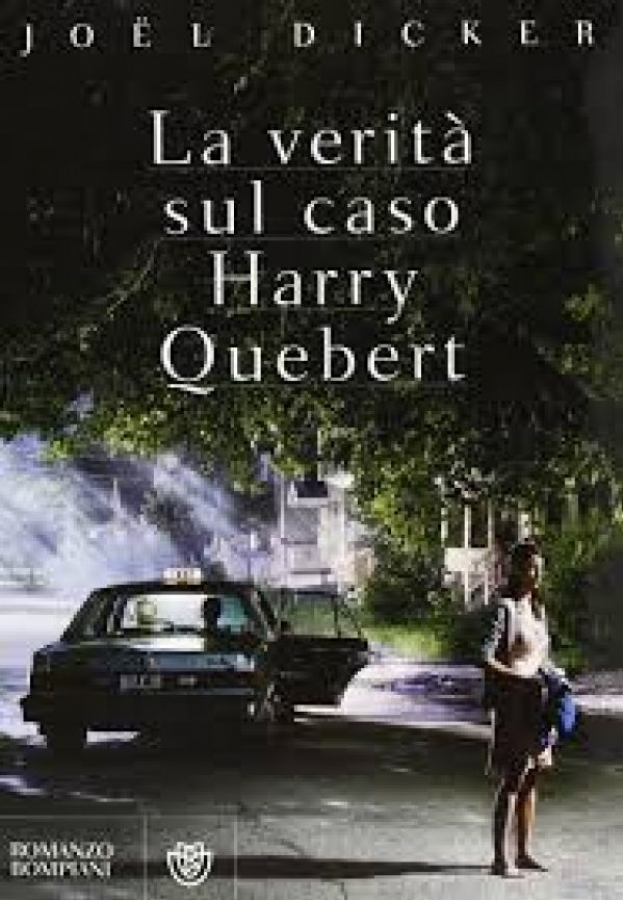
The Truth About the Harry Quebert Affair
Title of the original version reviewed: «La verità sul caso Harry Quebert»
AI Translation Notice: This review was translated from the original Italian using artificial intelligence. Book quotes and excerpts are translated interpretations and will not match the author's original English phrasing or official published translations.
Marcus is a successful young writer, but he has lost his inspiration. In a state of panic, he decides to turn to his mentor: Harry Quebert, a renowned author who, in the 1970s, sold over fifteen million copies of his second book, The Origin of Evil.
Harry’s advice is reassuring, albeit unsettling in light of the novel’s conclusion:
blank pages are nonsense, exactly like sexual debacles caused by performance anxiety
and he advises Marcus to come stay with him, in the quiet town of Aurora.
The young man accepts, only to find himself at the center of a police investigation that directly implicates Harry.
The remains of a fifteen-year-old girl, who vanished in 1975, are unearthed, and numerous clues point to Harry as the killer: the body was found buried in the garden of his home alongside the manuscript of the famous novel; Harry had carried on a love affair with the girl and likely murdered her to prevent a scandal from erupting.
Marcus refuses to accept the police’s conclusions and sets to work to refute the accusations and unmask the real killer.
Slowly—far too slowly—the events that led to the teenager’s tragic end unravel.
The reconstruction of the truth unfolds across two narrative tiers, nested within one another.
The first tier chronicles Marcus’s investigation and thus the gradual discovery of what actually transpired all those years ago.
The accounts of Harry and the other characters also allow for the development of the second tier: the present-tense narration of the events back then.
While the first tier exhibits more of the hallmarks of a classic small-town “noir”, the flashbacks seem aimed above all at probing the individual backstories of the characters, particularly Harry and the girl.
Why did his friend choose to become embroiled in a romance with a fifteen-year-old: out of superficiality, genuine love, or because he was hunting for material for a novel? Just as Marcus exploits his friend’s and the other characters’ long-guarded secrets, so Harry had “stolen” another man’s book to achieve literary stardom.
I was terrified, Marcus! That summer, writing was an enormous struggle.
I thought I would never make it...
and in my hands I held the original manuscript of what I considered a masterpiece.
So I decided to make it my own.
There it is: that is how I built my career and my life on a lie
.
As the saying goes, “too much of a good thing spoils everything.”
The author has weighed down the novel with an excessive number of ambitions: constructing a detective story; reconstructing, through an exasperating use of the “back-and-forth” technique, provincial life with its hidden mysteries beneath a bleak everyday serenity; addressing the unchecked ambitions of writers, willing to do anything to succeed in the greedy, ruthless world of publishing.
The outcome is an overlong tale, devoid of suspense as well as the requisite psychological and atmospheric depth: in short, a noir too tedious to captivate, and an inward and social exploration far too superficial to sustain interest.
The novel’s two-tiered, matryoshka-like structure is a sophisticated literary device; however, it renders the narrative repetitive and muddled when it fails to bring thematic and character-driven innovations to the story and lacks a recognizable formal cadence—two rules ignored in this book, often giving the reader the impression of pointlessly rereading the very same events.
The overwhelming predominance of dialogue over exposition does nothing to foster moments of suspense, as the “noir” genre demands, nor to better define the situations and characters, as the novel’s non-detective ambitions require.
Why not read it? It is dull, laborious, and inconclusive.
One is left wondering why it ever enjoyed such immense success.