Finished reading on: February 23, 2020
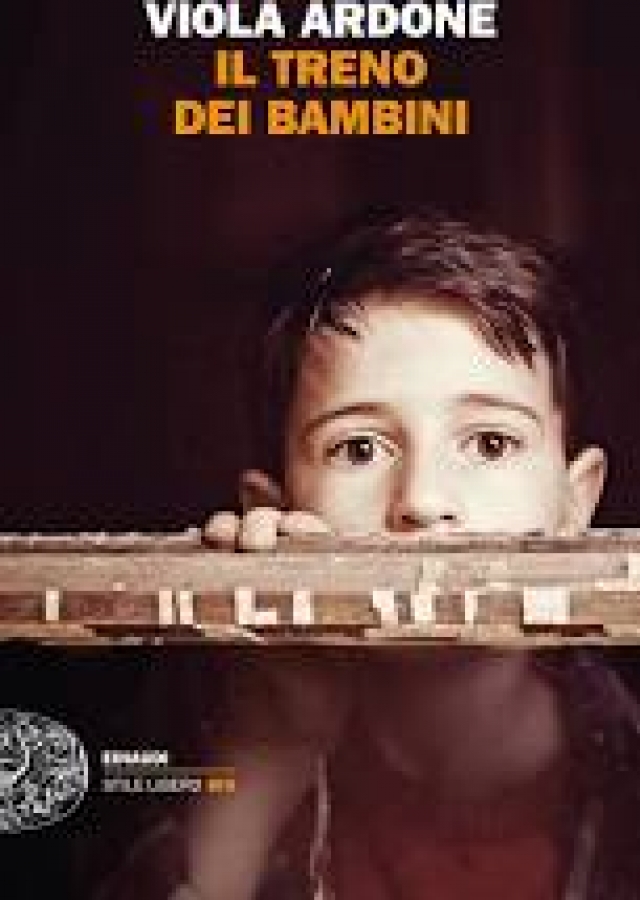
The Children's Train
Title of the original version reviewed: «Il treno dei bambini»
AI Translation Notice: This review was translated from the original Italian using artificial intelligence. Book quotes and excerpts are translated interpretations and will not match the author's original English phrasing or official published translations.
Between 1945 and 1952, approximately 70,000 children, mostly from the South, were taken in by peasant families in the Centre-North; this was made possible by the Communist Party, local Liberation Committees, the National Association of Italian Partisans, municipal administrations, and the local populations. It was a remarkable demonstration of national solidarity, which came to be known as the "Trains of Happiness." As Maddalena—a fighter in the Four Days of Naples—says in the novel to convince mothers to let their children go,
when we had to drive out the Germans, we women did our part. Mothers, daughters, wives, young and old: we took to the streets and we fought. You were there, and I was there too. This is like another battle, but against the most dangerous enemies: hunger and poverty. And if you fight, your children will win!
The social and political theme of this glorious, often forgotten experience remains in the background, allowing the author to develop a different subject. Toward the end of the narrative, the protagonist and narrator articulates the overall meaning of his story: "I let time slip away, and now it is too late." To understand this sentence, we must retrace the journey of Amerigo Speranza, son of Antonietta Speranza and an unknown father, officially gone to America to seek his fortune.
My mother in front and me behind. Through the alleyways of the Spanish Quarters my mother walks fast: for every step of hers, two of mine. I look at people's shoes. Intact shoe: one point; shoe with a hole: I lose a point. No shoes: zero points. New shoes: bonus star. I've never had shoes of my own; I wear other people's, and they always hurt my feet
. Amerigo accepts the squalor of the bassi and Antonietta's apparent coldness—she is too consumed by making ends meet to show affection to her son—as a natural state of affairs. Then, unbidden, the "Train of Happiness" bursts in. Along with so many other children, Amerigo leaves Naples for the North.
My mother Antonietta remains in a corner of the station that grows ever more distant, her arms crossed over my coat. As if she were holding me tight through the bombardments. (...) I look out the window, I think of my spot in Mama's bed. (...) I think of the streets where I used to wander all day collecting rags, rain or shine. I think of Pachiochia, who by now has gone to bed in her basso with the picture of the mustachioed king on the nightstand. I think of Zabagliona, and I seem to catch the smell of her onion frittata. I think of the alleyways where I lived, narrower and shorter than this train
. These images are too distant from the lovely fairy tale awaiting Amerigo in the North: a room of his own, new clothes, plenty of food, the affection of Derna—the woman who took him in—and above all, the discovery of the violin and of music. "By now we are split in two." For Amerigo, piecing the two halves back together proves impossible, as Antonietta does everything in her power to obliterate anything pertaining to life in the North, even going so far as to sell the violin.
she does something she has never done before: she steps even closer and holds me with both arms. (...) You have to wake up from that dream, Amerì; your life is here. (...) I did it for your own good. (...) I tear myself from her embrace, I get out of bed
. Amerigo would like to say so much, but can only voice his bitterness over the loss of his violin. "You're a liar," and he flees, catching the train back North. Many years later, Amerigo returns to Naples for his mother's funeral: he bears a different surname, he is a renowned musician, a stranger to his mother and to his city. Or at least he wishes he were, because
the cries from the markets, the endless gossiping of the women on the doorsteps of the bassi, the children chasing one another through the streets, and then a voice preserved in the deepest core of memory. Amerigo, Amerì! Come down, hurry, go ask Pachiochia for two lire...
He would like to reclaim his life, but it is too late.
Gone. Destroyed by ruthless fevers,/consumed by an unknown affliction, far away, I cannot tell./Nor do I know if they will return, or when, or how,/the friends, the days, the brightest season,/if the life lost through inattention/will ever return.
(Luciano Erba, "Lo svagato" from Il nastro di Moebius).
Reading the novel leaves a singular, almost incomprehensible impression. The book tackles a great theme, the plot unfolds linearly, and the prose is fluid, if at times pedestrian. And yet, one cannot help but remain uninvolved, as though its many threads (the Trains of Happiness, the maternal bond, the napoletanità, the bittersweet and somewhat petty-bourgeois ending) blended so superficially as to leave the reader detached, cold, and even baffled. The truth is that the characters lack psychological depth, just as the settings—particularly the northern peasant world—feel purely literary, contrived at a desk rather than lived.
Why read it? It is well written.