Finished reading on: February 01, 2017
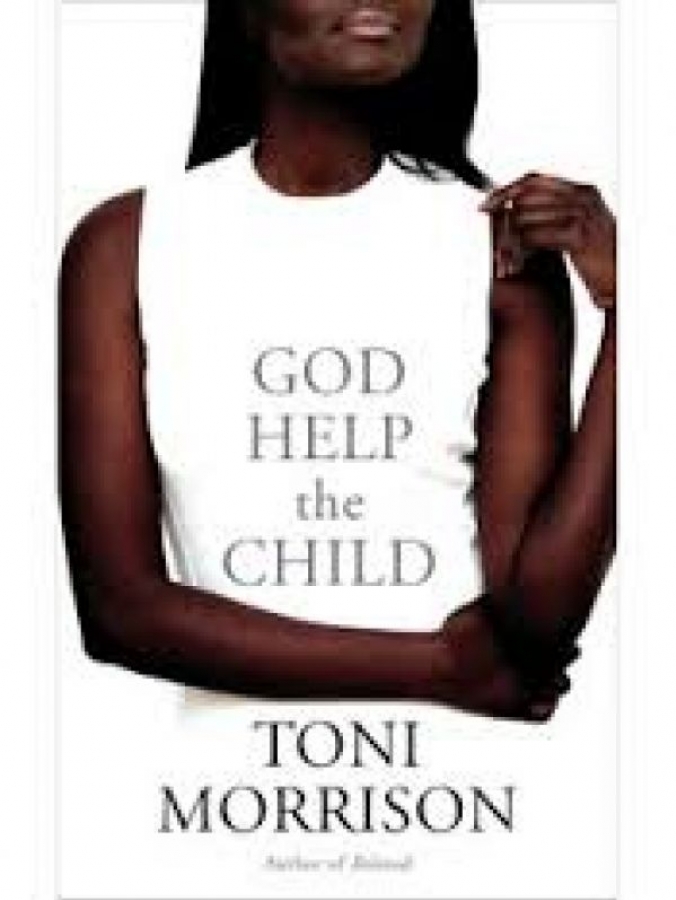
God help the child (Children first)
Title of the original version reviewed: «God help the child (Prima i bambini)»
AI Translation Notice: This review was translated from the original Italian using artificial intelligence. Book quotes and excerpts are translated interpretations and will not match the author's original English phrasing or official published translations.
For many of us, childhood was a source of suffering.
And each will rewrite this story forever, knowing the sorrow, imagining the plot, inventing its meaning, and forgetting its origin
.
Then one day we discover that
you accepted like a beast of burden the weight of an incomprehensible curse and the unjustified threat that binds you to wounds and leaves you with a fate; and you spend your life denying, even though that hateful word is only a fragile line drawn on a rock, quickly dissolved at any moment by the force of the sea
.
But what is this force? The author seems to suggest it may be love, attested by the birth of a child.
Two young people meet by chance, each bearing a secret.
Bride was born with skin of a “terrible color”: black.
She repulsed her mother to such an extent that she never touched her, even though it was hardly the child’s fault, but rather the twenty percent Negro blood in her family.
Still a young girl, in an effort to gain acceptance Bride commits a terrible act: through her testimony, she sends a woman to prison by accusing her of sexual molestation, knowing full well she is innocent.
Booker is a brilliant young man and a talented musician; his life was shattered by the death of his brother, raped and tortured by a sexual predator.
He wishes to live in memory and has run away from home, confronted by his family’s refusal to persist in perpetual commiseration.
They spend six intense months together, marked by overwhelming passion and a profound communion of purpose and feelings; yet both keep their painful secrets hidden from one another.
And then, one day, Booker walks out, simply saying: “you’re not the woman.”
Did he do it, perhaps, because she is Black, despite being glamorous and wealthy? Can neither beauty nor success overcome racism? Is it still the ancient sin of being born with that skin color? Bride wants to know; she sets out in search of Booker, eventually finding him at an elderly aunt’s home.
While searching for him, a strange phenomenon befalls her: she reverts to being a child, as though life were starting over from the beginning:
a child.
New life, immune to evil or disease, protected from kidnapping, violence, rape, racism, insult, hurt, self-loathing, abandonment, Error-free, All goodness.
Angerless.
Or so they believe
.
Through this inexplicable transformation, Bride frees herself from guilt and is ready to confess the terrible truth, as well as to embrace Booker’s suffering: she realizes he left her because he loves her,
so as not to overwhelm her with a grief so deep it would have broken her heart
:
Now she is pregnant.
Good luck.
(...) Listen to me, You are about to find out what it takes, what the world is like, how it works and how it shifts when you are a parent.
Good luck and God help the child
.
It is difficult to grasp the narrative line of this novel; too many themes overlap: violence against children, racism, liberation from suffering, and perhaps others besides.
The plot is muddled, and the constant shifting of narrator (the mother, Bride, the friend, the third-person narrative) certainly does not help; on the contrary, it disorients the reader by forcing them to piece the overarching thread back together, without adding anything to the understanding of the story or the characters.
What redeems the novel is the prose: even if weary when compared to the author’s other works, it still manages to enthrall with its elegant, muted syntactic construction, with words so evocative as to create expectations of meaning that nevertheless slip away and remain suspended.
In short, one is left somewhat disappointed.
Why read it? It is intense.