Finished reading on: August 09, 2025
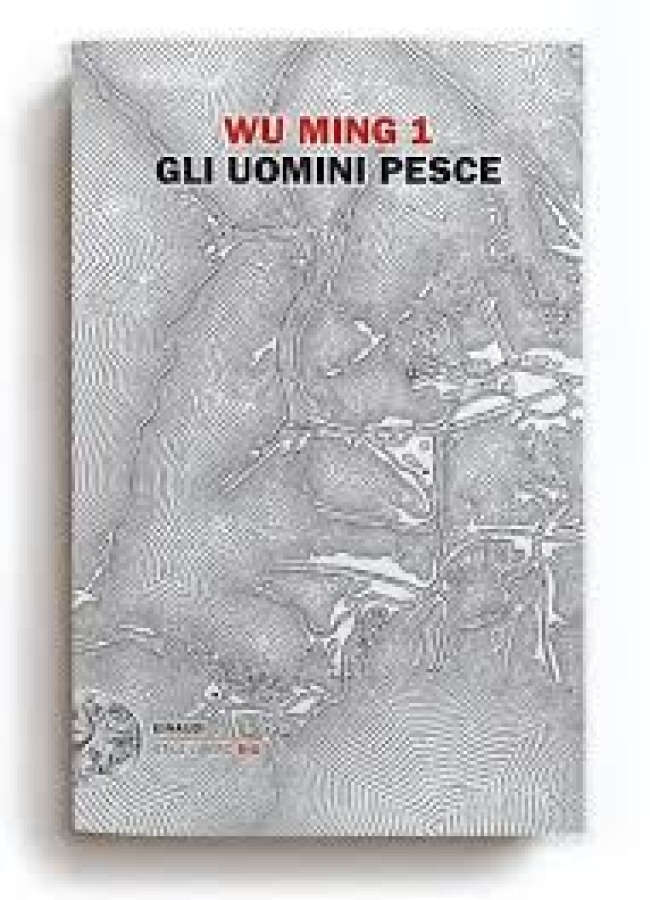
The Fish-Men
Title of the original version reviewed: «Gli uomini pesce»
AI Translation Notice: This review was translated from the original Italian using artificial intelligence. Book quotes and excerpts are translated interpretations and will not match the author's original English phrasing or official published translations.
Antonia Nevi is a young geographer at the University of Padua who has inherited from her uncle, Ilario Nevi, a house in Focomorto in the Ferrara area, a plot of land in Isola di Ariano in the Polesine, and a sizable sum of money. We find ourselves in the Po Delta, a vast territory that, as Antonia herself describes in one of her essays, the great river
has carved out, altered, and nourished, but also terrified and devastated
, and which was definitively overwhelmed in the post-war period, from the concreting over of the coastline to the land drainage projects that left behind a scarred landscape and vast, depopulated spaces. For Antonia, this is an opportunity to return to a cherished place following painful personal experiences (she lost twins she was carrying in her womb) and a troubled romantic relationship; above all, however, it is a way to evoke the memory of her uncle, a figure of great importance to her. From whom could her passion for the Po Delta have come if not from Ilario Nevi, who first experienced this land as a partisan, then documented its poverty and devastation, and finally retreated there to hole up through the long years of old age? Ilario Nevi
had never looked his age. At seventy he looked like a man in his fifties; at almost a hundred you would have taken him for eighty. Still a decent amount of hair, a lean physique just slightly broad at the hips, an upright gait, an alert gaze. Impeccably dressed until the very end -- always in a suit, never seen wearing a tracksuit -- and, naturally, clean-shaven. During her scouting of the inherited land, Antonia discovers in a shed
statuettes and statues of various sizes. (...) Pencil drawings, charcoal sketches, watercolours... All replicas of the same creature. The being was vaguely anthropomorphic, its posture more or less that of the Vitruvian Man, but the head, white and neckless, was that of a fish. (...) The skin of its back and limbs was covered in golden scales, while the belly was white, like the head, and diaphanous. (...) The being had gills, and its four limbs ended in webbed fingers and hooked claws. Between the legs, or whatever they were, one could see, sharply delineated, now a penis, now a vulva, now both. The story raises high expectations: are we in the presence of a witness to a past in which land and water coexisted, giving rise to hybrid beings? We expect Antonia to set out to investigate this mystery, piecing together the final years of her uncle's life: years devoted to environmental activism. A few pages seem to point in this direction; instead, as happens when an author tries to say too much, we are dragged into a partisan tale, into Ilario Nevi's escapades in the cinematic Rome of the 1980s, and above all, the Fish-Man is no hybrid creature: banal though it is, the uncle was simply a woman who lived her entire life hidden in the guise of a man. Such was my disappointment that I abandoned the book on page 309, abiding by Daniel Pennac’s rule: “Does a book drop from our hands? Let it drop” (from Come un Romanzo, 1993).
When I attended the book launch, quite a storm had broken out. Several institutions in Ravenna had refused to host the author; it seemed Wu Ming 1 intended to blame the disastrous floods of 2023 and 2024 on the abysmal management of the land (how could one deny it?) and, by extension, on the regional and local authorities. Indeed, I had assumed—mistakenly—that Gli uomini pesce was meant to critique land reclamation and foreshadow a reconquest of the territory by the waters: a thesis perhaps unrealistic, but undeniably thought-provoking. The novel is nothing of the sort. Are we still to be scandalized by someone who is “transgender”?
Another reason that prompted me to “drop” the book was the prose and the narrative structure. The former is fractured into short sentences, with a reliance on the now all-pervasive habit of verbless clauses between full stops; yet why not use semicolons and colons instead? The plot is rambling and muddled, not least because of the pile-up of disparate storylines that end up dispersing the main narrative thread, which ought to revolve around Antonia, her love for the Po Delta, and her affection for her uncle.
Why avoid it? Tedious and prolix.