Finished reading on: March 12, 2023
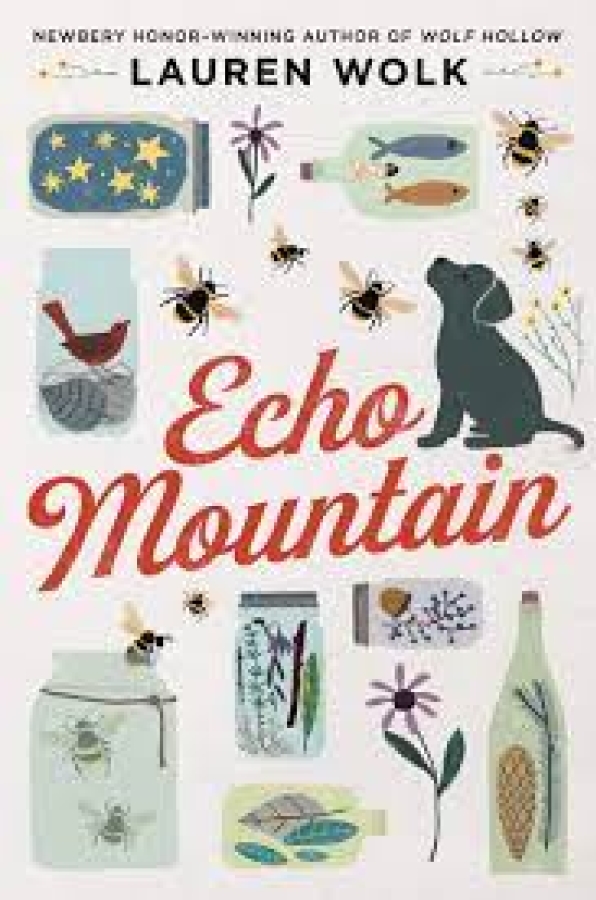
Echo Mountain (The Echo Girl)
Title of the original version reviewed: «Echo Mountain (la ragazza dell'eco)»
AI Translation Notice: This review was translated from the original Italian using artificial intelligence. Book quotes and excerpts are translated interpretations and will not match the author's original English phrasing or official published translations.
We are in Maine in 1934: in the wake of the Great Depression, a family has had to leave the city and relocate to the foot of a mountain, on the edge of the forest, adapting to life in an environment entirely foreign to their urban past. The mother confesses to her daughter Ellie, still an adolescent:
she looked at her ruined hands. I feel like a stranger in this new skin. I left behind too much of who I had always been.
Ellie, by contrast, is fascinated by this new life; she wants to understand and adapt. In this she has been helped by her father, a vital anchor for the young girl.
This bond with my father and the wilderness drove a wedge between me and my mother, and especially my sister, because both seemed to think that I had somehow betrayed them by feeling happy when they were not.
To understand what the "mountain’s echo" represents for the girl, one can point to the episode of her encounter with the bear.
But then I made the mistake of reading, in his eyes, that primitive quality I so admired. Of sensing, in him, a love for things I loved: lying in a meadow with the grass growing tall all around, hiding from everything except the sky and swarms of bees, heavy with flower pollen, nodding toward me (a splendid turn of phrase!) bobbing the way bees fly. Or the pink of the sunset. Or the clear whisper of a wood thrush.
We are in the throes of a full romantic idealization of nature! In Ellie, contradictory feelings coexist: an aching loneliness because she no longer feels part of the family, and a sense of freedom in an environment where she can roam, exploring the forest, learning to harvest honey, and doing practical chores under her father’s guidance. This precarious situation unravels when her father suffers a grave accident that leaves him in a coma. Ellie takes the blame upon herself, concealing the truth of what had happened: it was her little brother who, chasing a rabbit while the father was sawing a tree, caused the man to move, leading him to be struck by the falling trunk.
Part of me wanted to tell her that it was Samuel’s fault (the little brother), if the little boy could be blamed for anything. But when I thought of saying those words, I felt fragile and sad. (...) I decided that shifting the blame would be worse than shouldering it. If I had learned anything from the mountain, and from my father, it was that I would feel stronger and happier if I were able to face adversity and do it well. So I remained silent. And they took the silence for a confession.
How will Ellie overcome the anguish that overwhelms her: the estrangement from her mother and sister, the sight of her paralyzed father, the strained relationship with her little brother, the arduous life in the wilderness, the material hardships of an impoverished and isolated family? She will do so by venturing into mysterious nature, uncovering its magical and salvific secrets.
It is certainly a bildungsroman, though it must be said that Ellie appears to be a strong, resolute girl right from the outset. It is as if life’s hardships and the forces of nature merely brought out something Ellie already possessed. What weighs upon the entire narrative, rich in characters and adventures, is the banal depiction of a benign nature—the dream of an escape from urban and industrial life. It is too easy! The woods, the mountain, the wild animals are not friends, but primordial forces answering to the blind laws of the primitive world. Ellie ostensibly sets out to discover her new surroundings; in reality, the latter are merely a mirror of what we romantically daydream nature to be. To understand the novel’s limitations, one must turn to Treasure Island (see review on this site), where Jim faces dangers alone, evades the allure of evil—which exists regardless of what we might think—and in doing so truly comes of age.
The writing is elegant, alternating tight dialogue with fine descriptions rich in musical and captivating phrasing. Across too protracted an expanse, the plot frays, grows prolix, and loses the sharpness of the opening chapters.
Why not read it? It is banal.