Savelyev, Lavrinenko, Lukjanov Ganieva,
Books by this author (1)
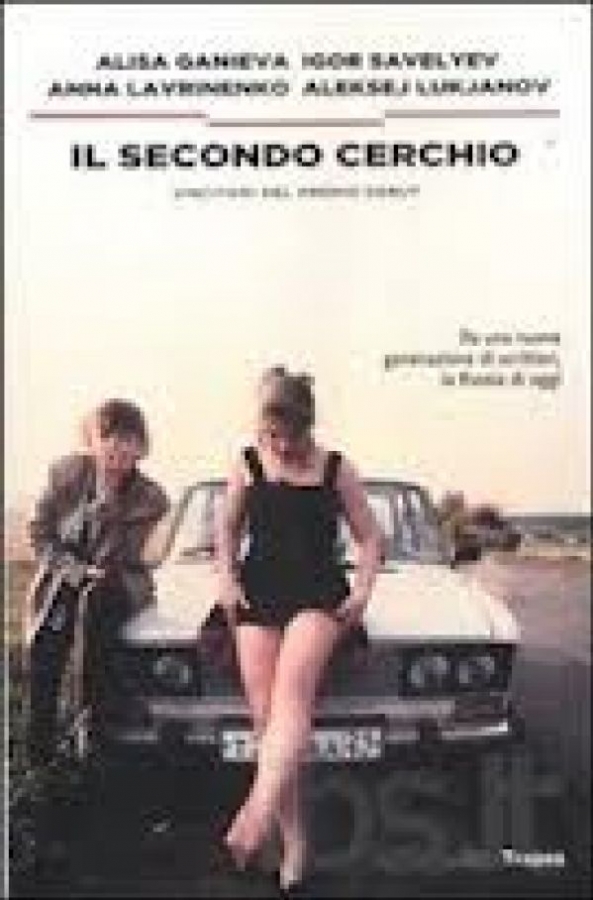
The Second Circle
The book brings together four short stories by young Russian writers who were children when the Soviet Union collapsed and are therefore utterly detached from the themes inherited from the fall of the empire. The stories exhibit entirely different styles and subjects, yet share a common motif: “the search for something we lack,” as concluded by Vladim, the protagonist of Savelyev’s short story, the most accomplished of the four. Alisa Ganieva’s *Salam Dalgat* is set in a city in the Caucasus. Dalgat, a young student “thin as a stick,” is searching for a relative, a quest that leads him across the city: through the bazaar, into squalid outskirts, to a wedding. Everywhere he encounters desolation, gratuitous violence, and the enduring clash between tradition and modernity. How far removed all this is from the official rhetoric that seeks to project a radiant, virtuous image of the lands and people of the Caucasus! In his wanderings, Dalgat meets a man who wants him to read a book about how the Caucasian nation was destroyed, along with its languages, songs, and secular poetry. Yet when the young man asks what the book is about, the man replies with a smile: “nothing special, nonsense.” While Ganieva’s style remains profoundly Russian, that of Igor Savelyev is minimalist, spare. His *Pale City* explores the world of hitchhiking. The protagonists are youths roaming across vast Russia with no real aim other than fleeing their parents and escaping bourgeois existence. Vladim, in his wanderings, finds lodging for the night in Ufa, one of the many cities bordering the Urals, staying with a chronically delayed university student. Here he meets a girl, Nastya, also a hitchhiker. A brief romance begins, which the young man wishes to pursue, but Nastya > grew heated.... I don’t care where I go (she says), as long as it’s far from home... I need new places to stay for just a short while.... casual acquaintances, people who appear and vanish . And so nothing remains but to hit the road again, in search of that “acute sense of loneliness that cannot be found in normal life.” Anna Lavrinenko’s *The Lost Child* is a delicate, sentimental, even psychological story, yet behind its apparent narrative normalcy lies a paradox: the protagonist, a call-center operator, is convinced he was abandoned by his mother at the age of five. This thought—was he truly abandoned?—has haunted him for thirty years, yet perhaps an event of such magnitude is not required to give meaning to life. > Perhaps it is enough simply to forget one’s keys, to sit down in a deserted stairwell . Finally, Aleksei Lukyanov’s *High Pressure* returns us, in a surreal manner, to the squalor of contemporary political life. A few laborers work wearily in a railway depot when they realize, day by day, that phones, the internet, and all means of communication have ceased to function. The government attempts to remedy this with an absurd scheme: steam-powered radio broadcasting. Yet this does not halt the decay; even important (“sacramental”) words begin to go missing. Everyone wants to escape to the West, but the trains are overcrowded. The future might well be one of desolation, poverty, and loneliness, were it not for the continuing cycle of the seasons. > The green had returned and some retail chains had liquidated themselves in great haste.... and so famine did not arrive . At one point, the government announces via steam radio broadcasting that it has grown weary of its citizens, who are far too ignorant to comprehend it, and has decided to abandon them to their fate. The steam broadcasting explodes, but words return, and freedom is finally attained. Yet are we in Italy or in Russia? The stories are finely written and address overarching themes typical of contemporary society: the disorientation of youth, but also the resolve to forge one’s own future independently and by one’s own means. The stories do not reach closure; they remain suspended and uncertain—yet this is precisely what lies before us: there are no longer any certainties. Why read it? It makes for an enjoyable read, with compelling and intriguing themes.