Margaret Atwood
Books by this author (1)
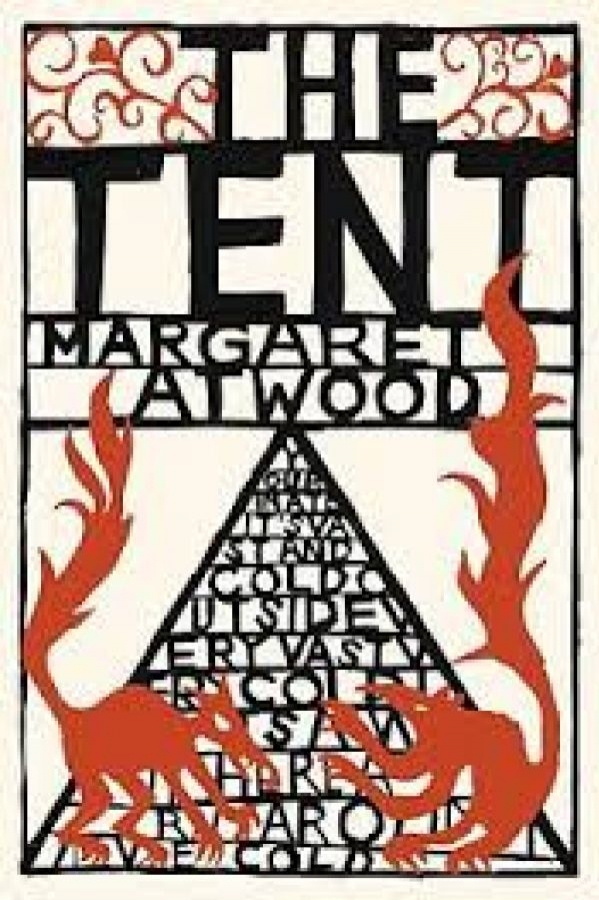
The Tent (Microfiction)
The book is a collection of minimal tales: hence the title *Microfiction* of the Italian edition, which nevertheless fails to convey the overarching meaning of the stories. From the very outset, the writer declares that > she is working on the story of her life, (but whoever) wanted a storyline should have asked for it earlier. (...) Before I discovered the virtues of scissors, the virtues of piecing together . These minimal tales are fragments of life, the expression of a reality that can no longer be reassembled. In the story *Horatio's Version*, Atwood takes Hamlet's tragedy as her starting point to arrive at a reflection on herself as a narrator of human affairs. > So I went back to the stories of individual facts. (...) The French Revolution, the Terror, the slave trade, (...) Vietnam, the Middle East, Cambodia, you name it. I was there. Sometimes I was a merchant of goods, sometimes a courier, sometimes a spectator, sometimes a dispenser of aid. (...) I spoke to victims of famine, war orphans, survivors of massacres and rapes, those who committed them—all sorts of people, with clean hands and dirty. (...) I think I am ready to speak. To tell how things are, now, in this world. Finally, I am ready to begin . But what can I truly say? > So shall you hear of carnal, bloody, and unnatural acts; of accidental judgments, senseless slaughters; of deaths perpetrated by force and deceit; and, in essence, mistaken ends devised by their creators' minds. All this can I truly deliver . Yet everything terrible that happens in the world is nothing more than a "magic mirror" of the human mind. > Look into the magic mirror, gentle reader. Look deep into the eternal desire for good. Ask yourself. But Atwood, like all of humanity, is lost in an "impenetrable forest," in which refuge can only be found in a tent—a metaphor for writing. > Why do you imagine this writing of yours, this graphomania in a fragile cave, this scribbling back and forth, up and down the walls of what is beginning to look like a prison, incapable of protecting anyone? It is an illusion, the conviction that your scribbling is a sort of armour—almost seductive, for no one knows better than you how fragile your refuge is . These minimal tales are not isolated fragments, stylistic gems of a great writer, but rather represent a meditation on the destiny of humankind and the function of the intellectual, of the writer. Can we still represent our era through a grand narrative? Or, just as conflicts, destruction, and deaths follow one another and overlap without reason, incapable of even being explained, must the writer inevitably take refuge in a tent, there to voice flashes of grief and rationality? It is no longer even possible to narrate; one can only evoke. As often happens, the virtues are also the shortcomings. Atwood creates poetry with the syntax and style of prose. The boundary between the two literary genres is tenuous; evocative impressions prevail over discourse. Without a narrative structure to provide synthesis and rhythm, each tale slips into paradox and repeated phrasing, often without any discernible meaning. Except for a few flashes, such as the exquisite *Impenetrable Forest* and *The Tent*, the whole comes across as prolix and ponderous. Why avoid reading it? It is tedious and intellectualistic.