Luisa Adorno
Books by this author (1)
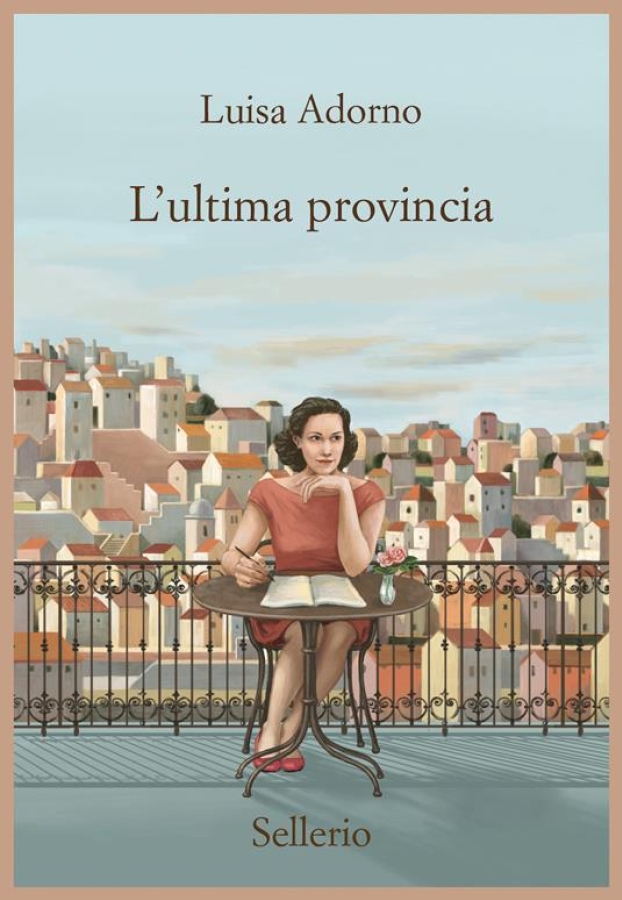
The Last Province
Luisa narrates in the first person her entry into her husband's family. Cosimo is the son of a Sicilian prefect who travels across Italy guided by two tenacious principles: nostalgia for Sicily, > when we were at Bosco Canniti...(...) a small piece of black earth, fine as sand, rugged with lava boulders, with ledges, knolls, sudden precipices: (...) a latifundium in its tenderness ; having a post where there is no "noxious weed," that is, where "poverty and a right-wing majority imprinted a slow breath." When Cosimo declared that he would spend the summer at the prefecture in his father's new post, "at that moment my human interest in him was born," along with a curious and affectionate willingness to let herself be drawn into a provincial family, so distant from her own culture and social background. And herein lies the essence of this novella. Luisa, an urbanite, left-wing and independent, does not adopt an attitude of superiority toward her husband’s family; rather, she describes with gentle irony the traits of a small social unit (the Prefect, the Prefettessa, the maid Concetta, and the dog), stubbornly Sicilian throughout, despite their numerous relocations across Italy. They form a series of portraits marking a sort of *Bildung* for the young woman, initially bewildered and amused, and later permeated by the subdued sweetness of provincial life. A few examples: The Prefettessa is ill, and amidst her feverish delirium fears that the faithful maid will abandon her: «Is it true that you are leaving with the *mondine*?, she asked breathlessly.» «Cu cui? [With whom?],» the other retorted, «and from that moment on it became a habitual curse:» «Cu' sti mondini». And the discovery of pyjamas at the dinner table? «In pyjamas, alongside care for one's clothing, one drowns self-control, and the restraint of one's speech. Mostly they stay silent, content, with the murky air of someone who has just got out of bed. If they speak, it is only in dialect. If they shout, it is 'cacchio'. Cacchio of a woman, of light, of a fly, depending on whatever jolt stirs them > . Official ceremonies are duties that the Prefect carries out with pained yet meticulous solicitude. He had put on a pair of comfortable shoes. (...) It was the feast of Saint Joseph (...) a procession with ranks of boarding-school boys, of little orphans.... grey rows of yoked young girls. (...) In April he had followed the Good Friday procession, in May that of the patron saint.... > . Having become a mother, with her baby in swaddling clothes, holidays at Borgo Canniti are an astonishing discovery for Luisa. Right from the ferry across the strait, soaring and solitary on a flat horizon Mount Etna had appeared, (...) A fine plume, ave!« exclaimed the Prefect. On the small farm »the heat was shelterless. (...) Indifferent to the dazzling reality, the Prefect was content with a straw hat, pyjamas, and a walking stick, to pace the grounds several times each day > . (...) When the sun disappeared behind the mountain and the small houses rose like a curtain to let in the evening air, the voices and noises seemed to die down. (...) From the bricks rose to our legs, enveloping them, an animal warmth that the fresh breath of the sea gradually cooled: the scent of jasmine was so sharp and precise that one could almost hear it To the child > Ce lo date 'u succu d'uva? the Prefettessa's sister asked in the meantime. (...) Within a few hours, before the gathered family, Concetta was slipping the first spoonful of juice into the child's mouth . The novella is slender, devoid of a true plot, vague and light like a sketched painting. Sustaining it is a refined, evocative, and pleasing style of writing, in which the recourse to dialect enriches the narrative, offering moments of fantastic suspension. It is as if an ancestral world, magical and intimate, peeked through an educated and thus distant stylistic approach: dialect breathes life into the characters and the descriptions of the settings. Too much is left unsaid for one to offer a wholly positive assessment. Why read it? Pleasant