Linda Lercari
Books by this author (1)
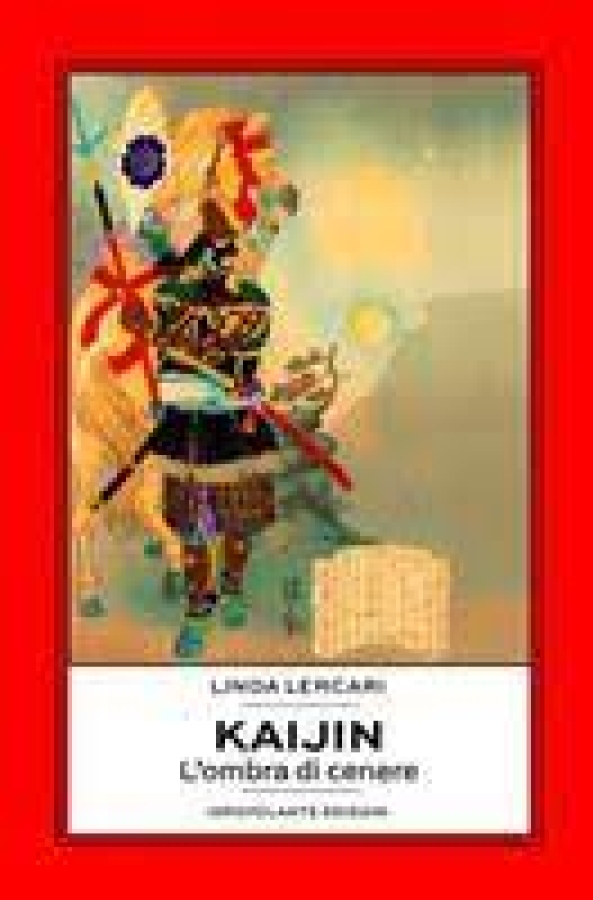
Kaijin the Shadow of Ash
For Giuseppe Ungaretti, there is a mystery within us, unknowable and unspeakable, and the purpose of poetry is not to unveil it but to allow us to strike a balance, as the protagonist of this story, Momokushi, puts it, > between that which is shown to the world and that which is kept hidden; between what is apparent and what is intimate and real. Grappling with this mystery is, ultimately, what all artists pursue; if for some, like Javier Marías, this means venturing into the labyrinth of contemporary relationships, as in *Tomorrow in the Battle Think on Me* (see the review on this site), Linda Lercari has chosen instead to investigate the secrets of the soul within a setting both dear and familiar to her: medieval Japan. The setting is the end of the Kamakura period, in 1330; following the Mongol attempts to invade Japan, the country is racked by endless warfare among rival feudal lords. Momokushi is a powerful castellan and warrior, with numerous samurai in his service. The story begins with the death in battle of Haka, the samurai closest to him in courage, prowess in combat, and loyalty. On his deathbed, Haka confesses something to him that throws Momokushi into turmoil. Deftly, the author does not reveal what his friend told him: it is a secret that Momokushi, and we alongside him, must slowly uncover. A sort of mystery novel unfolds in a setting that strikes us as fairytale-like, yet is rendered plausible through tangible details revealing Lercari’s deep knowledge of medieval Japan. Momokushi visits Haka’s concubine to ask if she knows anything, and is given a small chest containing his friend's belongings. Inside, he finds a poem of evocative yet obscure words ( > a thousand seasons / winter of the soul, / the heart dies. He discovers a *tsuba*, a small metal disc designed to protect the hand, which he realizes once belonged to him by its dragonfly motif: bewildered, he also notices that the engraving of a carp has been added, undoubtedly at his friend’s initiative. In Japanese culture, the carp symbolizes the freedom to follow one’s own path and the strength to overcome adversity. Alongside these physical clues, disordered memories of his life with Haka surface in Momokushi’s mind, particularly one episode: the two friends had walked away from the other samurai when Haka > suddenly grasped his hand and pressed it to his heart. His face scarlet red, redder than the cherry blossoms illuminated by the lanterns. In the memory > a faint pang of guilt stirred within Momokushi. Had he been more attentive, perhaps he could have divined what torment was corroding his friend’s soul, but he feared knowing the answer, and for that reason had always remained aloof. It will be the almond blossoms decorating his friend’s sword that reveal to him the secret of their life together and the words uttered by Haka on his deathbed. It is too late! As in the finale of João Guimarães Rosa's *Grande Sertão* (see the review on this site), nothing remains but the painful sense of loss for what never came to be. > Upon this meadow / among ancient trees / a sip of wine, / a song, a pillow, / no sounds / of fire and storm, / no threat, / illusion of feast. The story moves with the slow pace of a prose poem. One senses a melancholy sweetness, alternating between martial episodes, evocative descriptions of nature and the samurai milieu, and the whispers surrounding a bond as intense as that between Momokushi and Haka. The castellan Momokushi stands out in solitude: he is the proud, suffering protagonist. He scandalized the court by adopting Haka as a child, nurtured his intimacy with his friend despite the slander, and endured his grief, slowly becoming aware of what lay hidden behind their relationship—one only superficially akin to that between warriors. While the details are rich in evocative power, the plot is often redundant; frequent flashbacks confuse and weigh down the narrative flow to the detriment of rhythm. A leaner, more essential structure would undoubtedly have benefited the novel. The writing is elegant and pleasant: a remarkable mastery is evident in the descriptions of Japanese nature and society. Attention to detail lends verisimilitude to the entire narrative, steering clear of common clichés about Japan. Perhaps a deeper exploration of Haka’s character and his life choices would have been beneficial. Why read it? An engaging story, beautifully depicted settings.