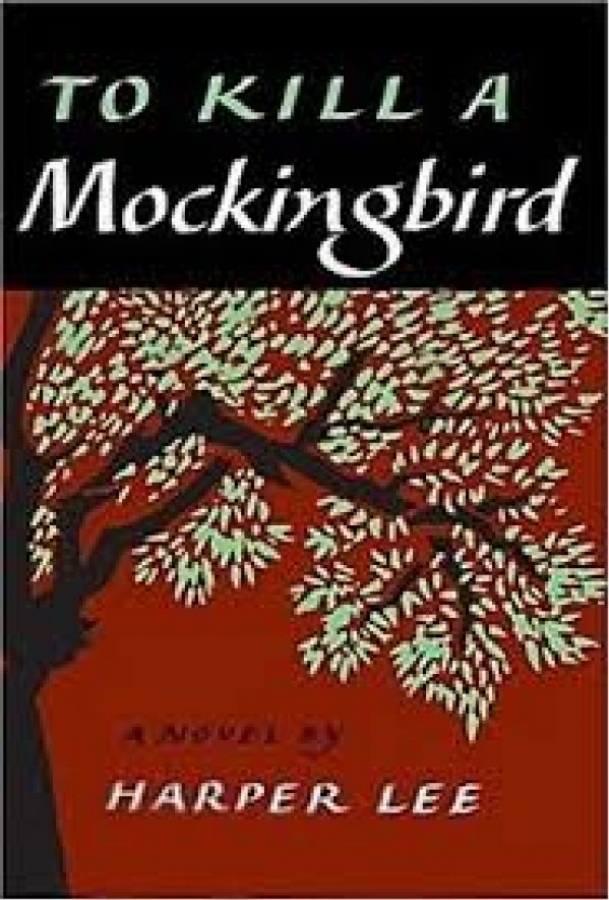
To Kill a Mockingbird (Il buio oltre la siepe)
> As I made my way home, I thought that Jem and I would grow up, but there was not much else left for us to learn, except algebra . With this verdict Scout, the novel’s young narrator, sums up the events of the book. But what has the little girl really learned? Maycomb is a southern town in the United States: > a tired old town. (...) In rainy weather the streets turned to red slop; grass grew on the sidewalks, the courthouse sagged in the square. (...) There was indeed a caste system in Maycomb, but to my mind it worked this way: the older citizens, the present generation of families who had lived side by side for years and years, were utterly predictable to one another: they took for granted attitudes, character traits, even gestures, since they had recurred in every generation and set in time. Scout is a lively, independent, restless little girl. Her "hero > is Jem, her older brother; her moral touchstone is her father. Atticus, addressed by his first name by his children, is an esteemed lawyer and the town’s representative in the state legislature; a widower, he raises his children to respect others and the community, but above all according to authentic values of justice and freedom. They’re certainly entitled to think that, and they’re entitled to full respect for their opinions, but before I can live with other folks I’ve got to live with myself. The one thing that doesn’t abide by majority rule is a person’s conscience > . Scout and Jem spend the long, hot summers constantly exploring the yard next door. In particular, they are drawn to a house where a person lives in hiding, shrouded in mystery. Who is he? Is he a monstrous and dangerous being? Why does he never step outside? The children attempt in some way to uncover this dark secret. And once again, as in so many episodes of the novel, Atticus’s serene wisdom emerges: everyone has the right to live as they see fit; what Mr. Radley (the shadowy figure) does might seem strange to us, but what he does isn't strange to him. “And besides, is it right,” Atticus asks, “to put his life's history on display so that it's at the mercy of neighborhood gossip > ? Atticus treats his children as equals, offering them advice but also accepting theirs: what would I do, Scout wonders, if Atticus didn't feel the need for my presence, help, and advice > ? The story could continue along the lines and rhythms of a childhood tale, when an incident of typically racist nature bursts in. A Black man is accused of having raped and beaten a white girl; Atticus is the court-appointed defense attorney, an assignment he accepts even though he knows it will pit him against the community. If I didn't, (he tells his daughter), I couldn't hold up my head in town, I couldn't represent this county in the legislature, and above all, I couldn't even tell you or Jem not to do something again > . What unfolds in the courtroom confirms Atticus’s great stature, both as a lawyer and as a man. His closing argument is the very epitome of what democracy is. Thomas Jefferson once said that all men are created equal. (...) We know (...) that some people are smarter than others, some have more opportunity because they are born with it, some men make more money than others...(...) But there is one thing in this country in which all men are created equal.(...) That institution is the court system > . Justice is an ideal; justice nevertheless exists because under the law all men are equal. Atticus deludes himself: the young Black man, though clearly innocent, is convicted simply for being Black; he is then killed during an escape attempt from prison. It is a double defeat: the judicial system is not impartial, and the young man did not believe in the justice of the law. The white girl's father decides to seek revenge because during the trial his honor > had supposedly been tarnished by Atticus; everyone understood that he was the one who beat his daughter. On Halloween night, Scout and Jem are attacked by the man. Jem tries to save his sister, and in the scuffle the attacker stabs and kills himself (or is he killed by the boy?). Jem, unconscious and injured, is brought to safety by none other than Mr. Radley, the monster next door. The story could have a happy ending, were it not that Atticus is convinced his son killed the man and wants the sheriff to proceed against Jem. If this thing's hushed up it'll be a simple denial of the way I’ve tried to raise Jem. Sometimes I think I’m a total failure as a parent, but I’m all they’ve got. (...) If I lived with that, I couldn't look him in the eye, and the day I can't do that I’ll know I’ve lost him. I don’t want to lose him and Scout, because they’re all I’ve got. > The sheriff refuses to press charges, standing on his authority, concluding disconcertingly: let the dead bury the dead > , that is, let justice be done, with the death of the one who was the cause of the conviction and killing of an innocent man. A Black man. And so what has Scout learned? She has learned that Justice does not exist, that there is no impartial judicial system; what is right and what is wrong, good and evil, are established by the community in which one lives: it decides, according to ancestral and deep-seated values, when to intervene, when to condemn an innocent man so as not to call into question the distinctions between classes and races, and when, instead, to conceal guilt behind a wall of silence, because prosecuting it would undermine the premises of coexistence and mutual respect. An enigmatic sentence concludes the novel. Atticus turns to his daughter and asks her if she too is convinced that the man killed himself. Scout reassures him by saying: well: it would be like killing a mockingbird, wouldn't it? > My interpretation is as follows: the mockingbird is innocence, which still believes in Justice; pretending to believe that the man killed himself is like acknowledging that capital-J Justice does not exist—family ties and community values alone firmly prevail. Scout is ready to become a young lady. After all, if Aunty could be a lady at a time like this, so could I." Scout has conformed; she has emerged from childhood. Alongside the grand ethical theme, that of Justice, the novel offers a splendid depiction of Southern society, its environment, and its social mechanisms: a narration through the eyes of a little girl, with the bewildered gaze of childhood. Enriching this fresco is the prose: it draws on the vocabulary and syntactic constructions typical of Southern speech, thereby lending freshness to the narrative and stripping it of any potential heaviness that might have arisen from its moralistic underpinnings. Reading it in the original language is obviously not easy, not least because an ordinary dictionary does little to aid in understanding the colloquial words and idioms. The lengthy digressions on town life are interesting, yet they slow down the narrative pace, which is not always gripping. Why read it? One cannot help falling in love with Atticus and his children.
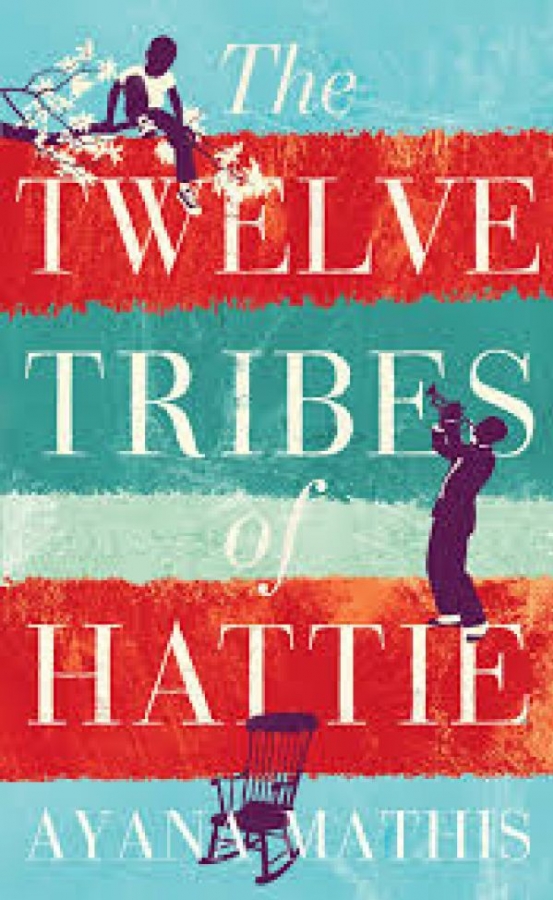
The Twelve Tribes of Hattie
> Fate had brought Hattie out of Georgia to bear eleven children and keep them alive in the North, but she herself was only a child, profoundly inadequate to the task she had been given . She is a Black woman; she left a land of segregation only to find herself in a degraded, impoverished, solitary, and marginalized urban periphery, yet she is determined not to return to the South and to raise her children against all odds, beyond her own strength, beyond her very capacity to love. The story begins in 1928, when sixteen-year-old Hattie has just given birth to twins. The cold, malnutrition, and the lack of medical care and medicine lead to the infants' deaths. > Oh, their skin was so soft! She felt their death like a mutilation in her own body : a wound that leaves her like > a lake of ice, thin and smooth, beneath which nothing could be seen or known or > a long January afternoon, the trees are always bare and there is not a single flower . Had Hattie been capable of loving more, of worrying less about keeping her children alive, would their lives have been better? The novel revolves around this question, and the author explores it with great skill by recounting episodes from the lives of the eleven children over a span of fifty years, up to 1980. After the dramatic episode of the twins' death, the narrative continues: Floyd, the eldest son, discovers his homosexuality; Six, another son, severely burned as a boy, finds his calling as a preacher in a Protestant church, but reveals himself to be a false and hypocritical man. The narrative then returns to Hattie to tell us about the only daughter born out of wedlock, the fruit of a brief and unhappy love affair, and about Ella, whom Hattie decides to give away to a sister in order to offer her a better future than that of her siblings. In the subsequent chapters, Alice's existential void takes center stage: she has married well and lives in an affluent home, but is condemned to a fragile survival due to her separation from Billups, the brother to whom she is deeply attached. Franklin, another son, has been abandoned by his wife and in some way courts death in Vietnam. With the final episodes, narrative tension mounts. Another daughter, Bell, has severed ties with Hattie ever since the latter discovered she had slept with an old lover of hers; yet Bell did so because as a child she had seen her mother with that man and she was so > beautiful and happy that an afternoon full of light was pale by comparison (...) whereas Hattie had always been stern and angry with Bell > . Only in the hospital bed, where Bell is admitted with tuberculosis, do mother and daughter find each other again, but even in this circumstance, Hattie had that same stern expression, in which Bell saw tenderness, Hattie's tenderness, which was always harsh > . Finally, we witness the madness of the youngest daughter, Cassie. Hattie and her husband, now elderly and frail, are forced to have her committed to a psychiatric hospital. As they take her away, Hattie sees in the rearview mirror her granddaughter, Cassie's daughter, running after the car, calling out and trying to stop them. She knew Cassie would not have wanted to be seen by her daughter at her worst. This was Hattie's kindness. With sorrow she parted daughter from granddaughter." The lives of Hattie's children are all in pieces, shattered because they never received that maternal love they so desperately needed. On the other hand, the amount of love a parent can give is finite; in Hattie's case, her social circumstances were far too wretched to leave her with any energy to devote to her children, beyond what was spent keeping them alive and preventing them from dying as the twins did. Too much suffering can only be endured by steeling oneself, by becoming hard and strong! The novel carries a powerful social dimension, yet it assumes a universal significance that transcends the specific plight of African Americans. The author addresses parent-child relationships, the difficulty parents face in understanding that material well-being is not enough, that there is something more that must be given: attention and affection. The failing of Hattie's tribe—and of children in general—is the inability to appreciate parental devotion, the tenderness and love that parents so often cannot or do not know how to express. The book is exceptionally well-written, with a gripping narrative pace and remarkably well-drawn characters. In her fateful misery, Hattie is a figure out of Greek tragedy, an African American Medea, harsh yet protective, difficult to forget. The author acknowledges her debt to Toni Morrison, yet Mathis's style is more straightforward than that of the great African American writer, just as her characters are more firmly anchored in their specific social condition. The novel displays a lucid narrative realism, a rich yet non-idiomatic vocabulary, and a classical, almost textbook syntax. Why read it? Dramatic, deeply compelling..