
Mansfield Park
A ten-year-old girl, a poor relation, is taken in by her uncle, Sir Thomas Bertram, a wealthy landowner and an influential member of parliament and the community. From the very beginning, the rules must be made clear: > without depressing her spirits too far, to make her remember that she is not a Miss Bertram ; and Fanny Price lives up to expectations: small for her age, without any particular beauty, exceedingly timid, bashful, and retiring, > the consciousness of being a poor relation grew hand in hand with the conviction that for a creature as insignificant as herself it was only right not to be happy . In a conversation with her cousin Edmund, with whom she strikes a chord from early adolescence, Fanny states: > I can never be important to anyone; what should prevent it? (asks her perplexed cousin), everything, my situation, my lack of judgment, my plainness . Yet it is precisely this loneliness, this feeling of being an outsider, of always having to be mindful of decorum and social norms, that helps forge a strong, independent personality, steeped in steadfast ethical values. None of this causes her to lose her "bearings" when the entire family allows itself to be swept away by the allure of the theater; taking advantage of the absence of Sir Thomas, away for an extended period on business in the West Indies, they decide to stage a then-famous play, *Loverʼs Vows* (*Lovers' Vows*). It is a period of "general madness," as Edmund will later call it, in which everyone steps outside the rigid social roles to which they must adhere, to assume the guise of the various characters in a play considered licentious at the time for its plot and dramatis personae. The only one who obstinately refuses to take part is Fanny; this allows her to observe the behavior of the others, and in particular that of Edward Crawford, a brilliant young man who shamelessly courts Fanny’s elder cousin, despite her already being engaged. Upon Sir Thomas's return, everything appears to return to normal, with Fanny more highly regarded by her uncle for the virtuous demeanor she maintained throughout the "general madness." We arrive at a turning point. Up to this moment, Fanny appears as a somewhat prudish girl, still waters, even slightly opportunistic and subservient; her true personality will emerge fully when she must confront a grave danger for someone so independent: a man seeks to decide her fate. Edward intends to "conquer" Fanny; accustomed to being pursued by women, he has found one who keeps him at a distance, and all of this intrigues him. It may be a whim, yet the man appears to have serious intentions: he is generous, affable, and through his connections he has arranged for Fanny’s brother to be made a naval lieutenant; he is an eligible match who would provide wealth and security to the impoverished girl. Yet she, now eighteen, cannot accept him. > She was feeling, thinking, trembling, about everything; agitated, happy, miserable, infinitely grateful, enormously angry. (...) No, no, no, she cried, hiding her face, all this makes no sense, (...) I will not, I cannot bear it. I must not listen to such things. No, no, do not think of me. But you are not thinking of me. I know well that all this is nothing . If she manages to withstand Edward's assault with ease, it is far more difficult to defy her uncle. Sir Thomas, bolstered by his authority, attempts to persuade Fanny; astounded and indeed angered by her lack of gratitude and respect, he runs up against the girl's categorical refusal. > With eyes intently fixed on one of the windows, she listened to her uncle in the greatest perturbation and dismay . And to her uncle’s bewildered question regarding the reasons for her refusal, Fanny's answer is simple yet revolutionary for the era: > I cannot love him, Sir, well enough to marry him. (...) Have you any reason, child, to think ill of Crawford’s character? (asks the uncle kindly). No, sir, (...) and she would have liked to add, but I have of his principles, and her heart failed her to tell the father of Crawford’s misconduct toward her cousin. Fanny’s troubles are not over. First she must face Edmund, and he too attempts to convince her; then she is sent for several months to stay with her parents—a ploy by Sir Thomas to show her the wretched social conditions in which she might live in the future, should her uncle's support be withdrawn; it would be wise of her to accept Edward's offer, a marriage to a wealthy young man. The matter resolves itself: the play was not merely an interlude of "general madness"—it unleashed the forces lurking beneath the rigid surface of bourgeois life. Sir Thomas’s family falls apart; specifically, the cousin abandons her husband and elopes with Edward. For Fanny, the story has a happy ending: she returns triumphantly to Mansfield and marries her cousin Edmund. Approaching the novel from Fanny’s point of view is perhaps an obvious and reductive perspective, given the numerous characters, the underlying social issues, and in particular the role of the theater within the narrative, its demonic and liberating function: a theme that has drawn the attention of most critics, to the extent of claiming that it would be impossible to read the book without being familiar with *Loverʼs Vows*. Beyond the historical context, the question remains remarkably relevant today: how profoundly can an eighteen-year-old’s experience be shaken? Fanny’s tribulations undoubtedly strengthened her, bestowing upon her the character that allowed her to govern her own destiny; but is all this just? Ought the girl not to have been protected, granted the opportunity to grow up peacefully? These are the questions that keep the novel relevant today. The novel is very long and does not always sustain its narrative pace; the prose is typical of Jane Austen, intricate and complex. To be appreciated, the book must be read with care and patience, seeking its value in the details, in the unexpected and ever-incisive insights into character psychology, in the spirit of independence that animates the entire work, and in the sharp, unerring judgments on humanity and society. Why read it? It is somewhat long, but well worth reading, with patience and care.
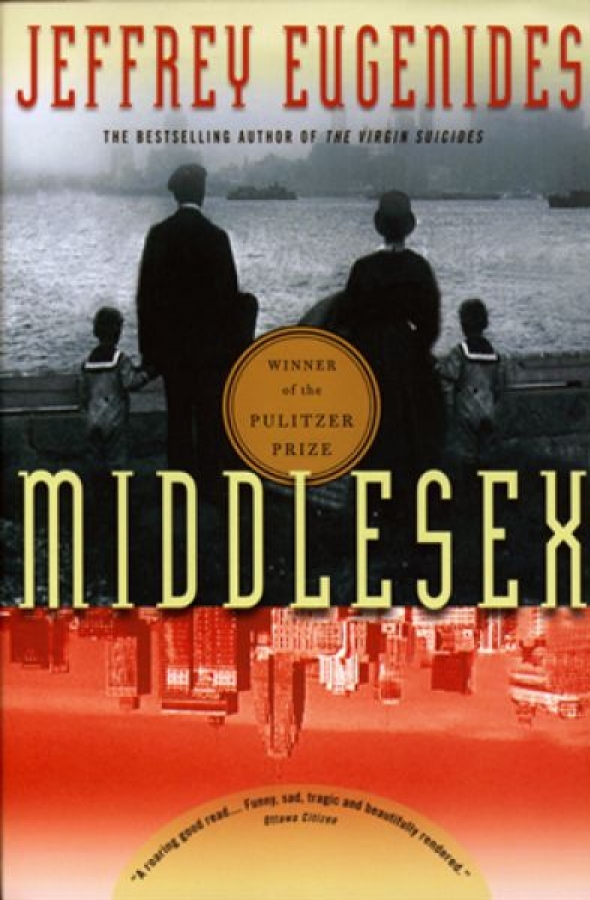
Middlesex
The book recounts the story of Callie Stephanides, born with female characteristics that evolve into distinctly masculine traits with the onset of adolescence. Sexual ambiguity, stemming from a genetic trait, determines the life of the protagonist, who is unable to accept himself—a male with underdeveloped sexual organs—until the very end of the novel, which chronicles several generations of his family. The novel can be divided into three parts: the saga of the grandparents, who fled to America from a Greece besieged by the Turks; the parents' story, followed by Callie’s childhood as a girl and young woman; and finally, the discovery of this sexual ambiguity—in truth, long suspected by the protagonist—leading to the decision to live as a male and the flight from the parental home. The best part of the novel is undoubtedly the first, as the narrative subsequently loses its evocative power and momentum, becoming increasingly tedious and predictable. The novel revolves around two fundamental themes: the ambiguity of individual identity, for we can embody multiple individuals and cultures all at once; and genetic inheritance, in the sense that we are what the evolution—biological included—of our family has somehow determined. Environment, life’s vicissitudes, and the people one encounters are all crucial factors, but what leaves the deepest mark is our history, for which we bear neither responsibility nor blame. In a historical period where every affliction is traced back to behavior, the book offers instead a return to a comprehensive view of the individual’s inherent traits. From this perspective, the novel proves superficial when called upon to describe the protagonist’s turning point, wherein he decides to reject the doctor’s attempt to force his nature toward the feminine and instead embrace a new life as a male. What impels him in this direction? How can he so effortlessly abandon a world of feelings and behaviors that had governed his childhood? Is cutting one’s hair enough? The novel fails to address any of this, and the family saga seems to prevail as the underlying narrative focus, overshadowing the protagonist’s experiences and inner life. Perhaps this is why the pursuit of a cultural identity (the Greek heritage blending with the American) appears far more pronounced than the sexual and individual one, which ultimately feels like little more than an expedient device to render the novel more alluring.